
Thailand Know Before You Go: Travel Tips & Common Mistakes (2026)

Seasonal travel planning
Planning your first trip to Thailand? Get ready to explore.
Some travelers instantly fall for Thailand—from its temples to its beaches—while others hit little frustrations right after landing.
After visiting many times, I've figured out what really helps first-timers enjoy the country without the usual headaches.
To make your journey easier, I've put together the practical tips, cultural do's and don'ts, and common mistakes to avoid—so you can enjoy the Land of Smiles like a pro.
Arrival & Pre-Trip
1. Fill Out Your TDAC Before You Land
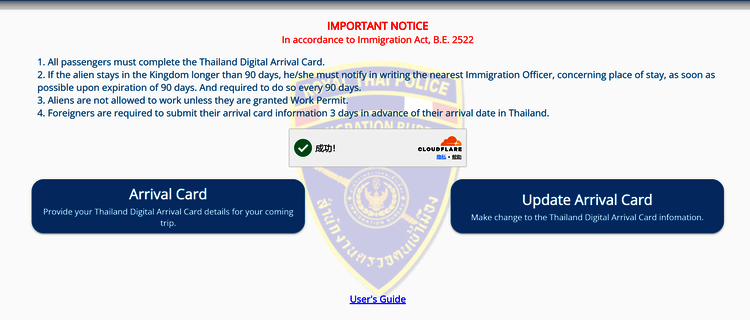
Thailand's entry process is now fully digital, so you'll need to complete the Thailand Digital Arrival Card (TDAC) within 72 hours before arrival. Make sure you use the official site (tdac.immigration.go.th).
It is free. If a website asks for payment, it's likely a scam.
The form takes a little time, so fill it out before you land. If you haven't, immigration may pull you aside to complete it on your phone. This can add 20–30 extra minutes.
Once submitted, you'll get a QR code and save a screenshot on your phone for easy access.
See more about Thailand Visa & Entry Requirements.
2. Make Your First Day in Bangkok Easy
Bangkok is an amazing city, but after a long flight, it can feel a bit overwhelming, especially on your first visit.
Traffic is often the biggest surprise. Even short distances can take a long time in rush hour. I once spent nearly two hours on a 30 km ride from the airport to my hotel.
So it really helps to stay somewhere near a BTS Skytrain or Metro station. The trains are air-conditioned, easy to use, and often much faster than sitting in traffic.
If you want to make things even smoother, choose a hotel along the Airport Rail Link. It's about 20 minutes into the city and connects easily to other lines.
When you land at Suvarnabhumi, you can take a taxi from Level 1 or use Grab at Gate 4. Keep around 150 THB in small bills, and if your driver asks about the expressway, it's usually worth saying yes—you'll just pay the tolls (around 25 + 50 THB) along the way.
Money & Payments
3. Keep cash on hand
Taxis, the airport express, and street vendors often only accept cash. Major malls and 7-Eleven usually take Apple Pay or Visa.
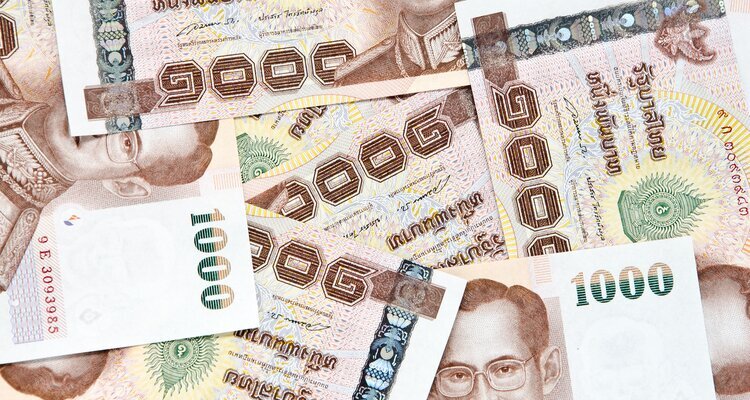
For exchanging money, avoid doing it at the airport, where rates are poor. It's fine to swap 1,000–2,000 THB for your first taxi or airport express ride, but for the rest, wait until you reach the city.
Look for exchange booths near BTS or MRT stations, or in most shopping malls—rates there are usually much better.
4. Use ATMs the Right Way
ATMs are everywhere, usually right outside 7-Eleven, but foreign cards often charge a flat 220 THB per withdrawal. To save on fees, it's better to take out a larger amount at once.
When using an ATM, the machine will usually give you the cash first and your card a few seconds later, sometimes even up to 30 seconds. Make sure you wait for your card before walking away!
Also, if the ATM asks to convert the currency, always say no. You'll get a better exchange rate letting your home bank handle it.
5. Tip Casually—No Need to Stress
Tipping in Thailand is pretty relaxed. Many restaurants already include service in the bill, so there's no pressure.
In high-end hotels, a 10% service charge is usually added automatically. For a private driver or guide, a cash tip of 300–500 THB ($8–$14) per day is a nice way to show appreciation for excellent service.
Transportation & Getting Around
6. Try a Tuk-Tuk, But Set the Price First
Tuk-tuks are a fun way to get around. You'll probably want to try it at least once. Just keep in mind they're often more expensive than you'd expect, especially for short rides.
If you take a tuk-tuk, always agree on the price first. Otherwise, you could overpay. I once paid 500 THB for a short ride in the rain, while Grab would've been about 60 THB.
Also, if a driver approaches you on the street offering a "tour," it's best to politely decline. These are often overpriced or include unwanted stops.
If you want a more relaxed experience, going with a guided tuk-tuk tour is usually a better option. Our Bangkok food tour by tuk-tuk is welcomed by many travelers.
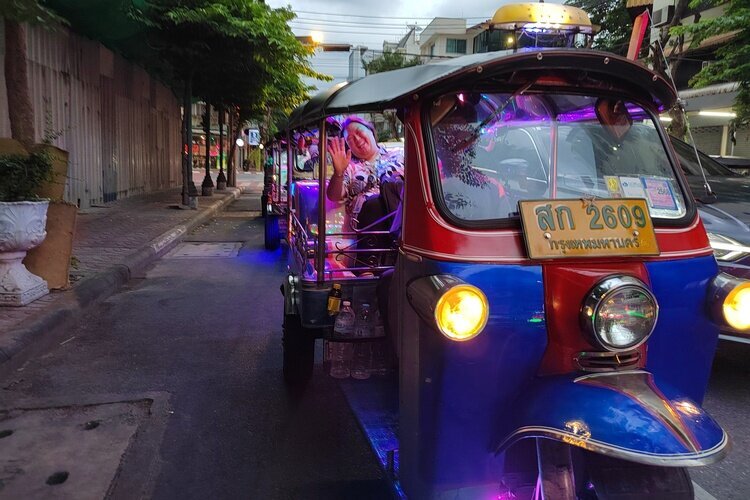 Tuk Tuk in Bangkok
7. Check the Meter or Just Use Grab
In Bangkok, taxis are supposed to use the meter, but in tourist areas (like the Grand Palace, Khao San Road, or late at night in Sukhumvit), it's quite common for drivers to refuse and ask for a fixed price. It's always worth checking that the meter is turned on when you get in.
If there's any language barrier, just show your destination on Google Maps, and it usually does the trick.
For convenience, Grab (Thailand's version of Uber) is often the easiest option. It's affordable, avoids negotiation, and works well in cities. Short rides in Bangkok can cost just a few dollars. You can also try Bolt or inDrive; Bolt is often cheaper than Grab in Thailand.
Outside Bangkok, things work differently. In places like Phuket, taxis often don't use meters at all, and prices are usually fixed or negotiated. For longer trips, airport taxi counters with prepaid rates are a safe and reasonable choice.
8. Fly When You Can
Thailand is bigger than many people expect, so getting from Bangkok to places like the islands isn't as simple as hopping in a taxi.
The good news is that domestic flights are often very cheap, sometimes as low as $20 to places like Phuket or Krabi.
Unless you specifically want the experience, you don't have to take overnight buses or trains. Flying is usually the fastest and easiest option.
See more about How to Get Around Thailand: Flights, Trains, Buses & Island Travel Tips.
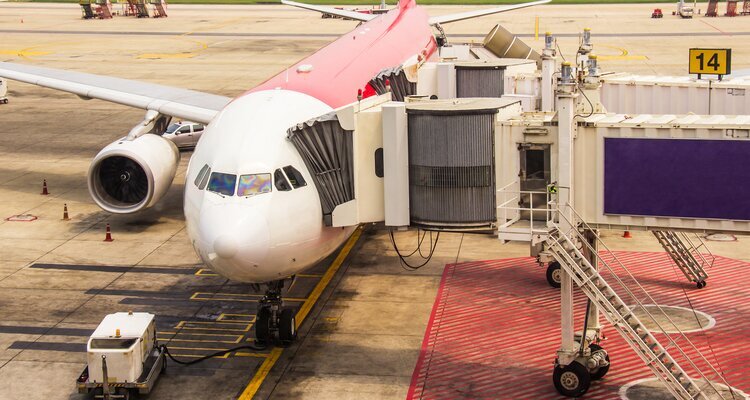 The Don Muang International Airport in Bangkok
9. Plan Around Ferry Schedules (or You Might Get Stuck)
Flights are fast, but getting to Thailand's islands usually means taking a ferry. And they don't run late.
Most routes to places like Koh Phi Phi or Koh Lanta stop around 4:00–5:00 PM. If your flight lands late, you may have to stay overnight on the mainland.
Weather can also affect schedules, especially during the monsoon season. If sea conditions are rough, ferries may be canceled. It's always smart to have a backup plan or a flexible hotel booking just in case.
Timing & Climate
10. Time Your Trip Right
It's well known that November to February offers the best weather across much of Thailand. But don't let the wet season scare you. Rain usually comes in short, heavy bursts that last less than half an hour. Traveling during this time can actually be rewarding, with fewer tourists and better prices.
Even in peak season, some times get especially busy and expensive, like Christmas, New Year, Chinese New Year, or Chiang Mai's Yi Peng Lantern Festival.
For a better balance of weather, crowds, and cost, try early November or late February. They are the sweet spots.
Explore the best time to visit Thailand by month.
11. Know About Northern Thailand's Burning Season
If you're planning to visit Chiang Mai between February and April, it's worth knowing about the "burning season."
During this time, agricultural burning can make the air quality unhealthy, with AQI often between 200–400. You'll also see the difference: distant mountains look hazy, and the sky can appear grey.
If you have asthma, respiratory concerns, or are traveling with kids, it's a good idea to consider heading south during these months, where air quality is usually better.
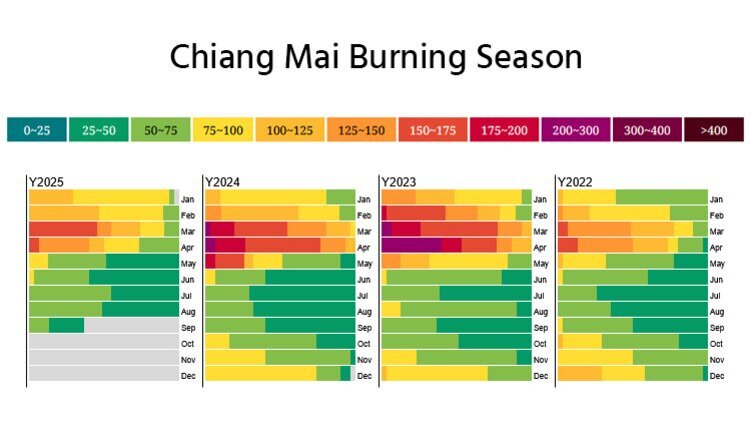 Chiang Mai Burning Season
Culture, Food & Shopping
12. Go Easy on the Spice at First
Thai food can be very spicy. "Medium" can already be quite spicy, so if you want to play it safe, go with pet nit noi (a little spicy) or mai pet (not spicy).
If a dish turns out hotter than expected, skip the water—rice or a sip of Thai iced tea usually works better. And don't worry, not everything is spicy, and it's easy to find milder dishes or international food when you need a break.
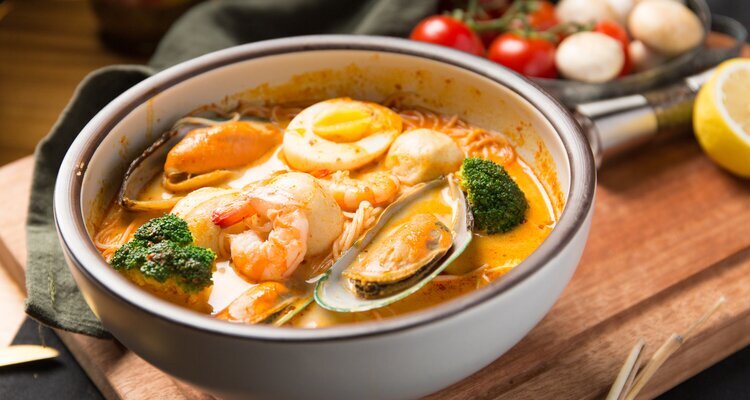 Tom Yum Goong, one of the most famous Thai dishes
13. Skip the Tap Water
In Thailand, ice is generally safe since it's made from filtered water, so drinks are usually fine. Tap water, however, isn't recommended for drinking. Stick to bottled water. It's cheap and easy to find everywhere.
14. Avoid "Thailand Belly" (Your Stomach Will Thank You)
For first-time visitors, stomach issues are not uncommon in Thailand.
Some travelers take probiotics to help their stomachs adjust. Start 2–3 weeks before your trip and continue while you're there.
If you're worried about street food, look for vendors wearing a "Blue Apron" or displaying the "Clean Food, Good Taste" (Shell Shuan Shim) certificate. These usually indicate basic hygiene training and better food safety standards.
It's not a foolproof solution, so if you're unsure, check with a doctor before you go.
And if you do feel unwell, electrolyte drinks and rehydration salts are easy to find at convenience stores like 7-Eleven.
15. Pay Attention to Temple Dress Codes
At temples, cover your shoulders, chest, and knees—no leggings, ripped jeans, or bare shoulders. Men should wear long pants, though shorts are sometimes fine in very hot weather.
A lightweight sarong is handy so you can wrap it around your waist or shoulders if needed. Some temples even rent them at the entrance.
You'll also need to remove your shoes before entering temple buildings, and sometimes even small shops or local restaurants. Wearing shoes that are easy to slip on and off makes this much easier.
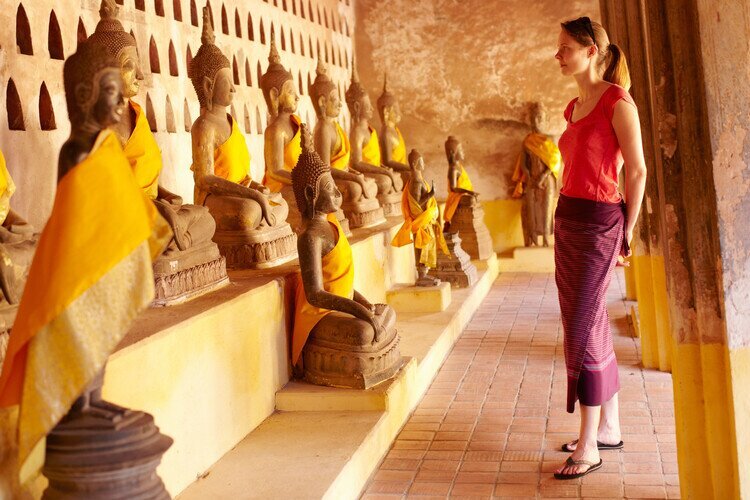 A simple example of what to wear at temples: a short-sleeved top with a traditional sarong.
16. Show Respect to Monks and Buddha Images
Monks are highly respected in Thai culture. Give them space and never touch them. A simple way to show respect is to slightly lower your head if you pass in front of a monk.
Also, treat Buddha statues and religious symbols with care. Never touch, climb, or sit with your feet pointing toward them.
17. Bargain Smart When Shopping
Shopping in Thailand can feel like a sport, especially at places like Bangkok's weekend markets or the night markets in Chiang Mai.
Bargaining is part of the experience. A common approach is to start at around half the asking price and meet somewhere in the middle.
The key is to keep it friendly and relaxed. If the price doesn't feel right, it's okay to walk away—vendors will often call you back with a better offer. Just don't overdo it. Haggling over a tiny amount usually isn't worth it, and a few baht can mean more to them than it does to you.
And don't be surprised if you end up buying more than planned. From affordable clothes and indie fashion to tailored pieces, art, and jewelry, Thailand is great for shopping. It's not a bad idea to leave some space in your suitcase—or even bring an extra bag.
18. Choose Elephant Sanctuaries Carefully
Elephant tourism used to be huge in Thailand, and some places still offer rides—say no. Others rebrand themselves as "sanctuaries" or "rescue centers," but that doesn't always mean they're ethical.
There are genuine, animal-friendly elephant sanctuaries in Chiang Mai and Phuket. They offer hands-off activities. You can observe, feed, and learn, but not physically interact.
If you're thinking about a close encounter with elephants in Thailand, consider choosing a certified sanctuary instead. We've handpicked a few trusted elephant sanctuaries for you for a responsible experience.
 I watched elephants roaming freely in the forest at ChangChill Elephant Sanctuary, Chiang Mai
Safety & Legal
19. Leave Your Vape at Home (2026 Update)
In 2026, Thailand has a zero-tolerance policy for e-cigarettes. On-the-spot fines for tourists can reach 50,000 THB. Customs scanners at BKK are highly sensitive. Do not bring them.
20. Stay Alert for Common Scams
In Bangkok or Phuket, anyone overly friendly on the street is usually up to something.
Thai people are friendly, but it's unusual for them to strike up a chat with strangers on the street.
Watch out for:
- "Grand Palace is closed" — they'll offer a "cheap tuk-tuk ride" that ends at a gem shop or tailor. Just walk to the entrance; it's almost always open.
- Jet Ski damage claims — take a 360° video before you ride or book through your hotel.
- Taxi meter tricks — ask "Meter?" first; if they refuse, walk away. Grab or Bolt is easiest.
Explore our guide to staying safe in Thailand and avoiding scams.
21. Be Careful with Cannabis (2026 Update)
Thailand's cannabis rules have tightened again, and it's no longer the free-for-all it once seemed.
Smoking in public or buying from unlicensed shops can lead to heavy on-the-spot fines or legal trouble.
If you're curious, look for shops with a valid 2026 medical license. For most travelers, it's safest to treat cannabis regulations as strict and stick to licensed wellness or CBD shops.