
How to Get Around Thailand in 2026: Flights, Trains & Island Ferries

Seasonal travel planning
Getting around Thailand is generally easy. But figuring out the best way to travel can be tricky. Even short trips to the islands often involve a mix of buses, ferries, and transfers.
The good news is that Thailand has one of the most flexible transport networks in Southeast Asia. Thailand offers everything from budget flights and overnight sleeper trains to long-distance buses and ride-hailing apps. The trick is picking the option that's easiest, fastest, or most comfortable for your route.
In this guide, we'll walk through the main transportation options in Thailand, how to travel efficiently between major destinations, what to expect when getting around cities like Bangkok, Chiang Mai, and Phuket, and practical tips that can save you time, money, and unnecessary stress.
How to Get Around Thailand: A Quick Guide
| Situation | Best Way | Why It Works | Watch Out / Tips |
|---|---|---|---|
| Long-distance travel | Flight (Low-cost) | Fastest option; 2 hrs covers the country. ฿800–1,500. | Budget airlines have strict 7kg carry-on limits. |
| Overnight journeys | NCA First Class / New CNR Train | Reclining seats or beds; saves one night of hotel. | Book 90 days ahead for trains; avoid old "Express" lines. |
| Heading to Islands | Joint Ticket (Bus + Ferry) | Seamless transfers; guaranteed connections if delayed. | Choose Catamarans (Lomprayah) to avoid seasickness. |
| Short Provincial Trips (within 3 hrs) | Private Car or Minivan | Private car: Door-to-door, 100% comfort. Minivan: Cheap & frequent. | Minivans lack luggage space; for 2+ people, Private Car is a better value. |
| Getting Around Major Cities | BTS/MRT or Private Car | BTS/MRT: Best for beating traffic. Private Car: Best for visiting 3+ spots in one day. | Skip Tuk-Tuks for long trips; use Grab/Bolt for one-off point-to-point rides. |
| Flexible Sightseeing | Private Car with Driver | No waiting in the heat. | Perfect for families/groups. |
Traveling Around Thailand by Airplane — the Most Convenient Way
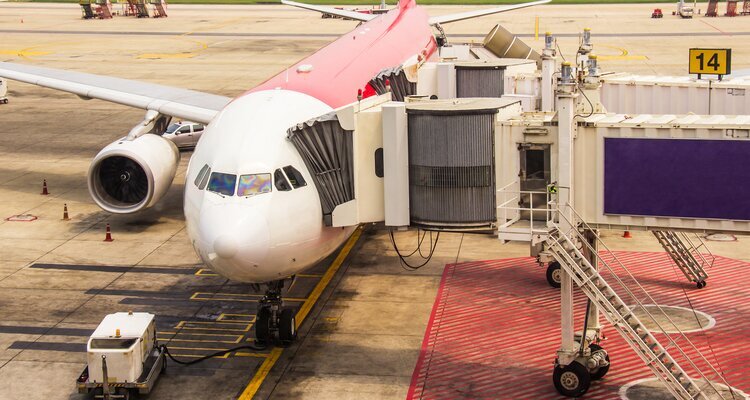
Flying is the fastest way to travel around Thailand. Frequent flights link Bangkok with major destinations like Chiang Mai, Phuket, Krabi, and Koh Samui. Most journeys take just 1–2 hours.
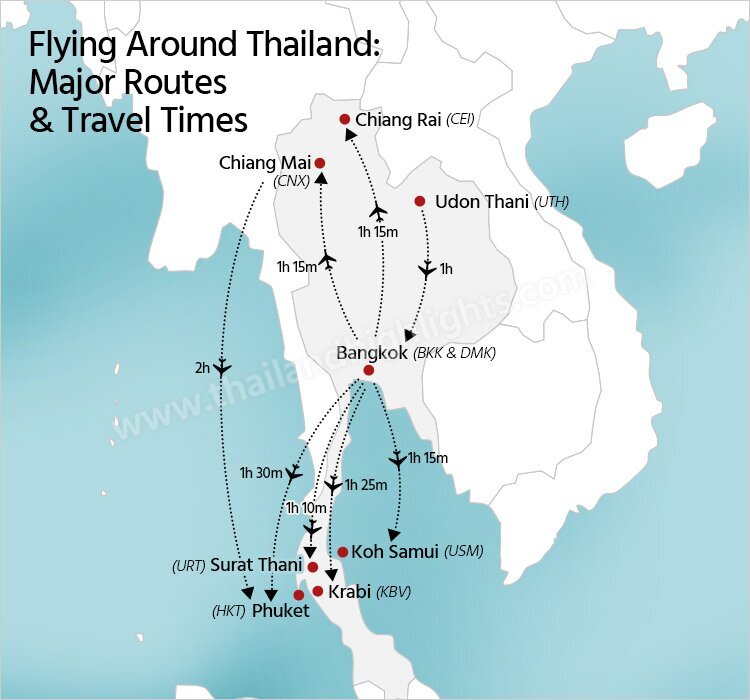
Airlines and Typical Fares
Thailand's domestic flight market is highly competitive, which keeps prices relatively affordable.
Typical one-way fares include:
- Bangkok → Chiang Mai: ~900 THB (~$25)
- Bangkok → Phuket: ~860 THB (~$24)
- Bangkok → Koh Samui: ~2,130 THB (~$60)
- Chiang Mai → Phuket: ~2,200 THB (~$62)
Budget airlines such as AirAsia, Nok Air, Thai Lion Air, and VietJet often run sales with 30–50% discounts, so booking early can significantly reduce costs.
However, pay attention to their baggage policies. Budget airlines typically offer only a 7kg carry-on. You will be charged an additional fee for checked luggage. Full-service carriers like Thai Airways and Bangkok Airways usually include 20kg in their standard fares.
Bangkok's Two Airports (What First-Time Travelers Should Know)
Domestic flights in Thailand are generally easy to arrange. Bangkok is the only city in Thailand with two major airports, which can sometimes confuse first-time visitors. In most other Thai cities, there is only one airport, so you usually won't need to worry about choosing.
When you choose flights, pay attentions to the airports in Bangkok:
- Don Mueang Airport (DMK) – the hub for most low-cost domestic airlines such as AirAsia, Nok Air, and Thai Lion Air.
- Suvarnabhumi Airport (BKK) – the main international airport, used by Thai Airways, Bangkok Airways, and many international carriers.
Important tip:
1. Try to book your international arrival and first domestic flight from the same airport. Transferring between BKK and DMK can take 1.5–2 hours in traffic, plus time for immigration, baggage collection, check-in, and security.
2. If changing airports is unavoidable, leave at least 5–6 hours between flights.
3. A free airport shuttle bus runs between the two airports. You can use it by showing a valid boarding pass for a departing flight at the other airport.
Flying to the Islands: Flight + Ferry Connections
Traveling to Thailand's islands often involves combining flights with buses or ferries. The easiest option is to buy a combined transfer ticket that includes both the flight and onward transport. Airlines like Bangkok Airways often provide these connections.
Inside tip: Flights to Koh Samui (USM) can be pricey since Bangkok Airways operates most flights. A cheaper option is to fly to nearby Surat Thani (URT) and then take a bus and ferry—usually adding 2–3 hours but cutting costs by 50–70%.
Seasonal and Practical Tips
Domestic flights in Thailand are generally reliable, but a few seasonal factors are worth noting.
- Peak travel periods (Songkran in April, December–January holidays) often sell out weeks in advance — booking early is essential. And it's also wise to arrive at domestic airports 2–2.5 hours before departure, as security lines can become very long.
- Early morning or late-night flights can save time and avoid traffic on the way to the airport.
Traveling Around Thailand by Train — Classic Slow Travel
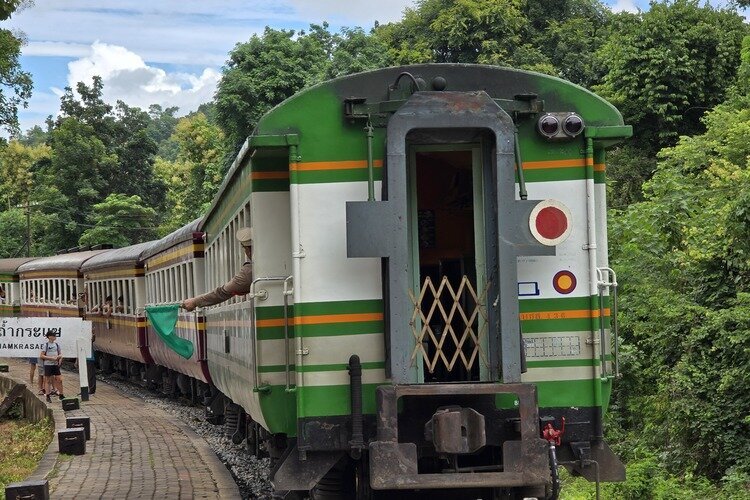 The 3rd class train in Thailand
Trains in Thailand are budget-friendly and can be a great travel experience. However, they are relatively slow. If you only have 7–10 days in Thailand, flying is usually the more practical way to cover long distances.
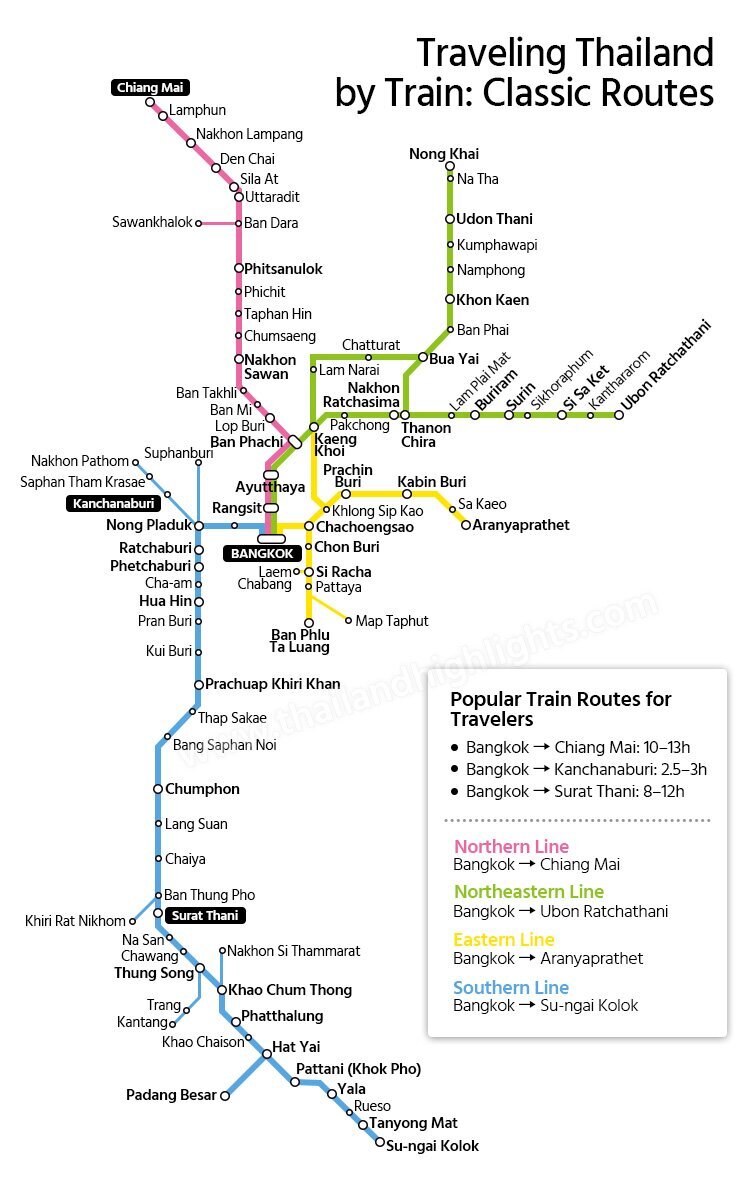
Popular Train Routes for Travelers
Thailand's rail network connects Bangkok with four main directions: north, northeast, east, and south. While trains reach many parts of the country, only a few routes are especially popular with travelers.
- Bangkok → Chiang Mai (about 10–13 hours) — the famous overnight sleeper route and one of the most iconic train journeys in Thailand.
- Bangkok → Ayutthaya (about 1.5–2 hours)— an easy day trip from the capital
- Bangkok → Surat Thani (about 8–10 hours)— gateway to islands like Koh Samui and Koh Phangan
- Bangkok → Lopburi (about 2–3 hours)— known for historic temples and monkey
Scenic and Tourist Train Routes
If you want a short, memorable train experience, try the Bangkok → Kanchanaburi route. It runs along part of the historic Death Railway built during World War II, with wooden trestle bridges over cliffs above the Kwai Noi River. It is one of Thailand's most scenic and historically significant train rides.
Another option is the weekend train from Bangkok → Hua Hin. It's affordable and leaves a few hours to explore Hua Hin before returning the same day.
 The ride on the historic Death Railway in Kanchanaburi
Overnight Sleeper Trains: A Unique Travel Experience
The most famous rail journey in Thailand is the Bangkok–Chiang Mai overnight train.
Many travelers love the overnight train for its convenience. You board in Bangkok in the evening and wake up ready to explore Chiang Mai the next morning.
The train takes 12–13 hours, while a plane takes about 1 hour. It's best for travelers who want the experience, not speed.
Tips:
- Women-only sleeper sections are available on this route.
- The lower berth is slightly wider and more comfortable, and it often sells out first.
Train Classes in Thailand
Thai trains offer three main classes of travel. We recommend 2nd-class for the classic experience and 1st-class for privacy. 3rd-class is best for short local trips.
1st Class — Private Sleeper Cabins
Available on some overnight trains, 1st-class cabins offer two beds in a private, air-conditioned compartment with a lockable door.
This is the most comfortable option and works well for couples or travelers who want privacy, though availability is limited and tickets often sell out early on popular routes.
2nd Class — The Classic Thailand Train Experience
For most travelers, 2nd-class air-conditioned sleeper is the sweet spot between comfort and price.
These carriages have curtained sleeping berths, air-conditioning, and attendants who convert the seats into beds in the evening. It's comfortable enough for an overnight journey while still offering the authentic feel of train travel in Thailand.
Tip: If possible, choose a lower berth. It costs slightly more but is usually more comfortable and wider.
3rd Class — Basic but Very Local
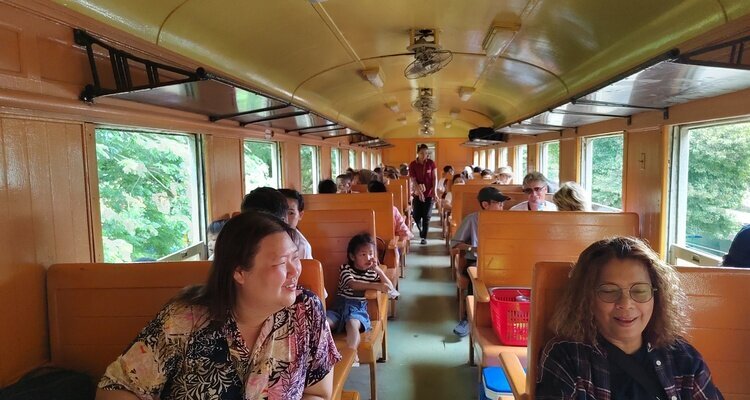 the interior of the 3rd class train in thailand
3rd-class cars are the most basic option, with simple seats and no air-conditioning. They are extremely inexpensive and are mainly used for short daytime journeys.
For trips of one to three hours, 3rd class can actually be a fun local experience — vendors often walk through the carriages selling snacks, drinks, and fruit. Just don't expect much comfort, and it's not suitable for overnight travel.
CNR Train for a More Comfortable Journey
If you want a more comfortable overnight train experience, try to book one of Thailand's newer red CNR train carriages.
These modern trains are noticeably better equipped, with features such as USB charging ports, cleaner interiors, and modern bathrooms.
You'll usually find them on Special Express services, especially on popular routes such as Bangkok–Chiang Mai and Bangkok–Hat Yai.
Ticket Prices and Booking Tips
Train travel in Thailand is generally very affordable. Typical starting fares include:
- Bangkok → Chiang Mai: from ~370 THB (about $10–11)
- Bangkok → Surat Thani: from ~300 THB (about $8–9)
- Bangkok → Ayutthaya: from ~70 THB (about $2)
Tickets are usually available 30–90 days in advance depending on the route.
For popular sleeper trains such as Bangkok–Chiang Mai, it's best to book 2–3 weeks ahead, especially during the high season.
Tickets can be purchased:
- via the official SRT D-Ticket website or app
- through booking platforms like 12Go Asia
- directly at major train stations
Practical Tips for Train Travel in Thailand
- Bring a light jacket. Air-conditioned carriages can be surprisingly cold at night.
- Plan for small delays. Long routes can run 1–2 hours late, so keep your schedule flexible.
- Use the Red Cap porters. At major stations, they'll carry heavy luggage for a small tip—much easier than struggling on your own.
- Know your station. Most long-distance trains now leave from Krung Thep Aphiwat Central Terminal (opened 2023). Hua Lamphong still handles some local and commuter trains, so check before you go.
Traveling Around Thailand by Bus and Minivan
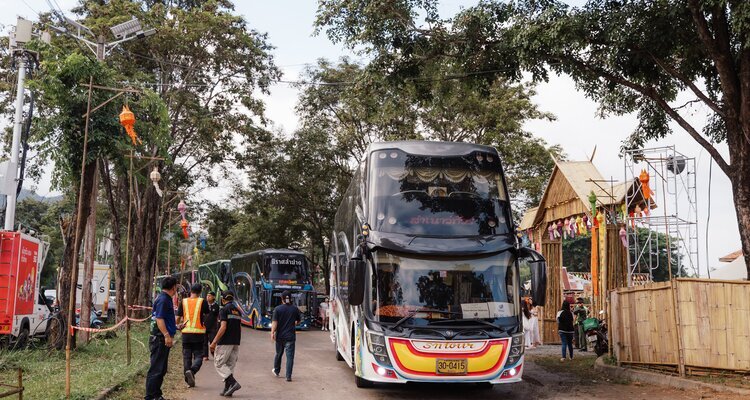
Buses and minivans are the cheapest and most extensive way to get around Thailand. It can be an option for short to medium distances (about 3–6 hours) or for reaching places without airports or train stations, such as Kanchanaburi or Hua Hin.
However, for long routes like Bangkok to Chiang Mai, we don't recommend buses, and trains or flights are usually faster and more comfortable.
Popular Bus Routes for Travelers
- Bangkok → Kanchanaburi: about 2–3 hours, gateway to the famous Death Railway and waterfalls
- Bangkok → Hua Hin: about 3–4 hours, an easy beach escape from the capital
- Chiang Mai → Chiang Rai: about 3–4 hours, the most common way to travel between the two cities
- Bangkok → Ayutthaya: about 1.5–2 hours, a popular historical day trip
Bus Types in Thailand
Thailand offers several types of buses, ranging from basic local services to comfortable long-distance coaches.
1) Nakhonchai Air (NCA) – Comfortable and Reliable
For comfort and safety, NCA is my top pick. Their buses have spacious 1-2-1 seating, massage chairs, entertainment screens, and meal service—almost like business class on a plane.
Women-only seating is available in First and Gold Class (Row 3 is usually female-priority). Main routes cover Bangkok → Chiang Mai/Chiang Rai, Bangkok → northeastern Isan, and Chiang Mai → Rayong/Pattaya.
Prices are reasonable: Gold Class from Bangkok to Chiang Mai is ~740 THB—about 100 THB more than a standard long-distance bus.
Booking tip: Use the NCA app, BusX, or even pay at 7-Eleven with a QR code.
2) VIP and First-Class Buses
If you're traveling to southern destinations such as Phuket, Krabi, or Koh Samui, NCA runs limited services. Instead, companies like Sombat Tour or VIP-24 buses operated by government 999 coaches and reputable private operators are among the best options.
Depending on your needs, you can look for specific bus types:
- For maximum privacy (solo travelers): Choose Sombat Tour's Supreme Class (VIP-20) buses. They use a 1-1 seating layout, meaning no seatmate — one of the most private coach options in Thailand.
- For extra legroom (great for tall travelers): Look for VIP-24 buses, which have only 24 seats per vehicle. Seats typically recline 135°–145°, offering generous legroom for long journeys.
- For the classic overnight bus experience: Some Sombat Tour and government 999 routes stop at highway service areas late at night (around 11 PM–1 AM), where VIP tickets often include a complimentary hot meal — a small but memorable part of Thailand's long-distance bus culture.
3) Second-Class Buses
If you're on a tighter budget or taking short trips (under about 3 hours) — such as Bangkok to Ayutthaya or Bangkok to Nakhon Pathom — second-class buses can work well.
Fares are usually 30–40% cheaper than VIP buses, and departures are frequent.
However, they're not recommended for overnight travel. Seats recline only slightly, many buses lack onboard toilets, and frequent stops can make long journeys less comfortable.
4) Ordinary Local Buses
These are non-air-conditioned local buses, and we don't recommend them for most travelers unless you simply want to experience everyday local life.
The buses usually have fully open windows, which actually makes them one of the best ways to observe daily life in Thailand — from rural scenery to local passengers carrying groceries, market goods, or sometimes even livestock.
In 2026, in Bangkok, many traditional red buses are gradually being replaced by blue electric buses operated by Thai Smile Bus (TSB). These newer buses are quieter, more environmentally friendly, and support cashless payment.
Minivans: Frequent but Tight
For destinations that large buses can't reach directly, minivans are an option. Common routes include Bangkok → Pattaya (1.5 h), Bangkok → Hua Hin (3 h), or transfers to spots like Maeklong Railway Market.
They're quick for short trips, but safety can be a concern. If you choose a minivan, stick to well-known routes and daytime departures.
Bus Ticket Prices and Booking Tips
- Very short routes (e.g., Bangkok–Ayutthaya): about 60–150 THB
- Medium routes (e.g., Bangkok–Hua Hin or Pattaya): about 180–300 THB
- Long-distance routes (e.g., Bangkok–Chiang Mai or Phuket): about 600–1,000 THB, depending on the bus class
Where to book tickets:
- BusX (top local choice): One of the most recommended bus-booking apps in Thailand in 2026. Its interface is more modern and it often includes smaller local bus companies that may not appear on 12Go.
- D-Ticket: Originally designed for train tickets, but it now also integrates some government-operated bus routes.
- 12Go Asia: Still the most traveler-friendly platform with full English support, making it convenient for first-time visitors. However, note that it usually adds a small service fee of about 30–50 THB.
Travel Tips for Bus Travel
1. Avoid "Khao San Road Bus" Scams
Never buy "tourist bus" tickets from agencies on Khao San Road or random street vendors. These buses sometimes steal baggage or force you to switch buses mid-route. Stick to official bus terminals, company websites, or trusted platforms like BusX and 12Go.
2. Pay at 7-Eleven if Needed
If your credit card doesn't work on a Thai app, don't panic. Choose "Counter Service", then show the barcode at any 7-Eleven and pay in cash. It's still one of the safest ways to get your ticket in 2026.
3. E-Tickets Are Usually Enough
Most companies, like Sombat Tour, now let you board with a QR-code e-ticket. But Nakhonchai Air (NCA) sometimes still wants you to exchange it for a paper ticket at their counter—arrive about 20 minutes early to be safe.
Getting Around Thailand By Ferry

Traveling by sea is one of the most scenic parts of a Thailand trip—but also the most unpredictable. Knowing which boats to take, when, and how to get tickets can save you stress and time.
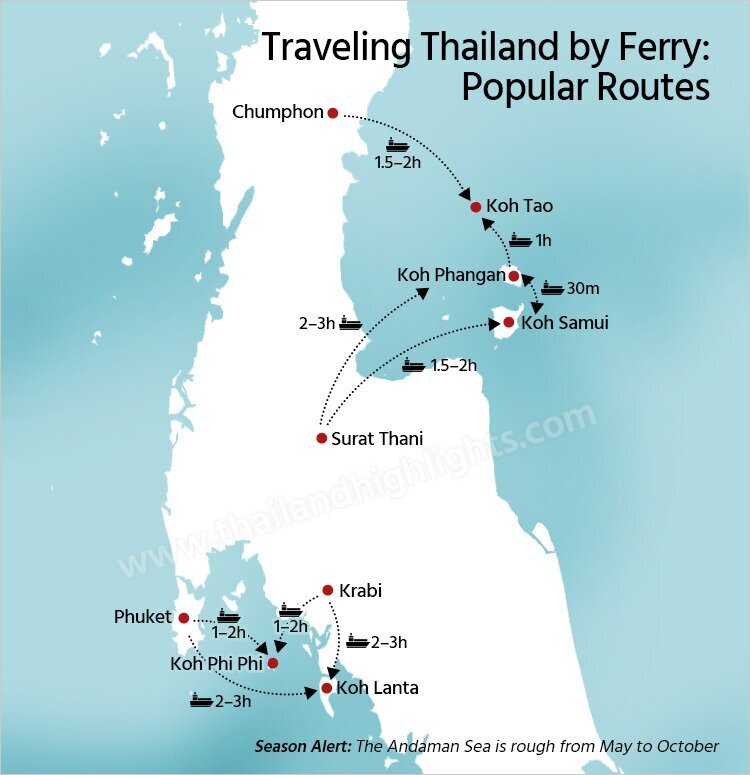
Big ferries vs. speedboats
If you just want to relax and avoid feeling queasy, go for a large ferry. They're stable, comfy, and perfect for taking in the views. High-speed catamarans or speedboats are faster and fun when the water is calm, but they can be bumpy. Not the best choice if your stomach is sensitive.
Smart ways to get tickets
The easiest way to travel: joint tickets that combine bus + ferry (or train + ferry). This is especially handy for routes like Surat Thani or Chumphon ↔ Koh Samui, Koh Phangan, or Koh Tao. If your bus is late, the ferry usually waits for joint-ticket passengers.
I usually use 12Go or Lomprayah's official site. Don't fall for random agents at the pier—they often charge way too much.
Sample Prices (One-Way)
| Route | Price Range | Best For |
| Short Crossings (Bali Hai → Koh Larn) | ฿30–฿200 ($1–6) | Ultra-budget, local wooden boats |
| Medium Routes (Phuket → Phi Phi) | ฿450–฿1,200 ($13–35) | Depends on speedboat vs. large ferry |
| Long Routes (Chumphon → Koh Tao) | ฿600–฿1,100 ($17–31) | High-speed catamarans (Lomprayah) |
| Surat Thani → Samui (Joint Ticket) | ฿500–฿850 ($14–24) | Includes bus transfer from airport/town to pier |
Timing & Season Tips:
- Morning rides are smoother, less crowded, and better for photos.
- If you're prone to seasickness, pick indoor seats near the middle of the ferry, closer to the waterline. It makes a big difference.
Monsoon season warning: Andaman Sea routes (Phuket, Krabi, Koh Lanta) often close May–Oct. The Gulf (Samui, Phangan, Tao) is mostly reliable, but November can be choppy.
Renting a Car or Motorbike in Thailand — Not Recommended
Driving yourself might sound like freedom—but in Thailand, it's usually more hassle than it's worth.
Traffic can be crazy. City streets are hectic, motorbike accidents are common, and parking rules are strict. That "freedom" can quickly turn into stress.
Legal catch: You can only drive on a foreign license for 60 days after entering. Even with an IDP after that, fines start at 2,000 THB—and road checks are everywhere.
Insurance nightmare: Most rental insurance won't cover you without the proper IDP endorsement. One accident could cost hundreds of thousands of baht.
Better way: Skip the headache. Use Grab or Bolt, or book a private car with a local driver. You'll save stress—and probably money too.
How to Choose the Best Transport for Popular Routes
Travel times in Thailand can vary a lot depending on whether you fly, take a train, or go by bus.
Here's a quick overview of typical distances and travel times for some of the most common routes travelers take.
| Route | Distance | Flight | Bus | Train |
|---|---|---|---|---|
| Bangkok → Chiang Mai | ~700 km | 1h 15m | 9–10h | 11–13h |
| Bangkok → Phuket | ~840 km | 1h 30m | ~12h | 12h+ |
| Bangkok → Koh Samui | ~760 km | 1h 15m | 12–14h* | 13–15h* |
| Chiang Mai → Chiang Rai | ~190 km | — | ~3h | — |
| Bangkok → Ayutthaya | ~80 km | — | ~1.5h | 1–1.5h |
Bangkok to Chiang Mai
The most recommended option is flying. The flight takes about 1.5 hours, and if you book 2–4 weeks in advance, tickets often drop to around $25–60 USD.
I usually suggest Thai Airways or Bangkok Airways. They may cost $10–20 more than budget carriers, but they include 20 kg checked baggage and meals.
Scenic alternative:
Take the overnight sleeper train for a classic Thailand travel experience. If you go this route, try to book the new red CNR trains (trains No. 9 or 10). The 2nd-class lower berth is surprisingly spacious and comes with power outlets. Tickets open 90 days in advance during peak season and can sell out within minutes.
Bangkok to Phuket (and Krabi)
Flying is the most convenient choice. The journey takes about 1.5 hours, and tickets usually cost $30–70 USD with many departures every day.
Bus alternative (12+ hours):
Honestly, I don't recommend it unless you're trying to save the cost of one hotel night. If you do take the bus, try to book a VIP 24-seat bus. These buses offer much more legroom and reclining seats, which makes the 800 km journey much more comfortable.
Chiang Mai to Chiang Rai
The best value option is the bus operated by GreenBus Thailand. The journey takes about 3 hours.
The V-Class (VIP) seats cost around $12 USD and usually run non-stop, which can make the trip about 30 minutes faster than regular services.
A private car is a good option for small groups. A one-way transfer usually costs around ฿2,500–3,500. For three or four travelers, this can be quite reasonable and allows you to stop at places like Wat Rong Khun (White Temple) or Wat Rong Suea Ten (Blue Temple) along the way.
Phuket to the Islands (Koh Phi Phi, Koh Samui, Koh Phangan, Koh Tao)
The easiest way to travel between Phuket and nearby islands is to book a joint ticket that includes both land transport and ferry.
Companies such as Lomprayah High Speed Ferries operate reliable transfers connecting Phuket with islands like Koh Phi Phi, Koh Samui, Koh Phangan, and Koh Tao.
A special note for Koh Samui. Don't forget—flying to Surat Thani + bus/ferry can save you big on Koh Samui trips.
Getting Around Major Cities
Getting Around Bangkok
In Bangkok, the BTS Skytrain and MRT Bangkok cover most tourist areas efficiently, with fares usually around $1–2 USD per ride.
For evenings or late returns, Grab or Bolt are convenient options. Try to avoid rush hour (7–9 AM and 5–7 PM). If you grab a taxi, ask the driver to use the meter and it usually saves hassle and ensures a fair fare.
For a more local experience, you can also try a tuk-tuk for short rides—fun for a quick spin through busy streets, though prices should always be agreed in advance.
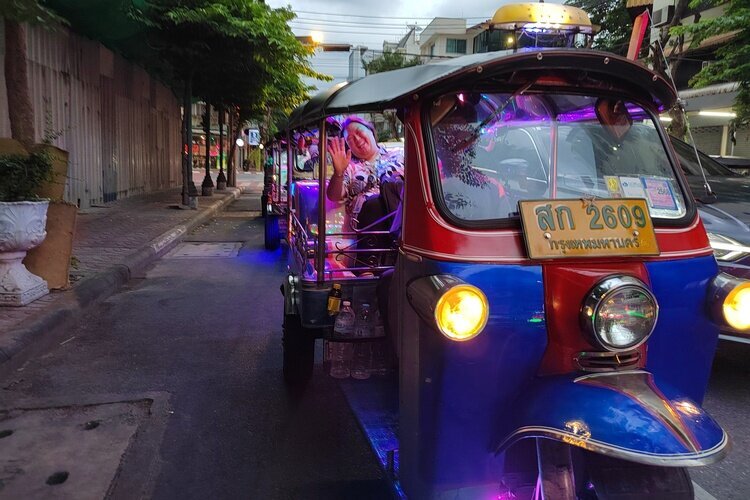 Tuk tuk in Bangkok
Another memorable way to see the city is by long-tail boat on the Chao Phraya River or its canals (klongs). It's not just transportation; it's also one of the most atmospheric ways to glimpse old Bangkok from the water.
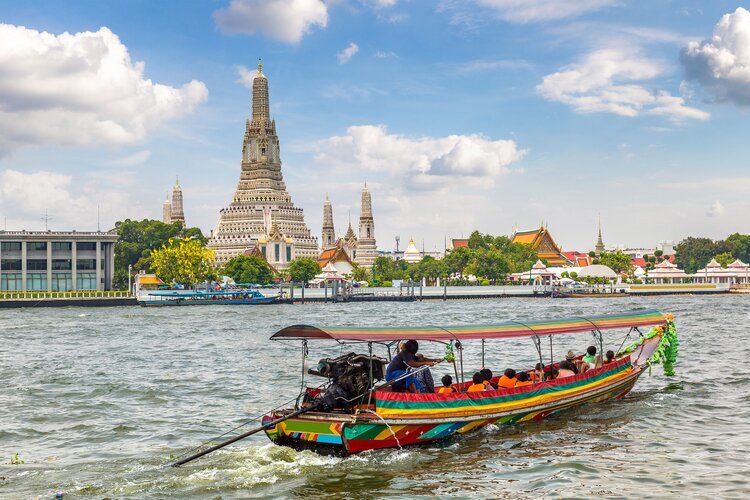 The long tail boat ride in Bangkok
Getting Around Chiang Mai
In Chiang Mai, the iconic red songthaews are still the easiest way to get around short distances, usually costing around $1–2 USD. For longer rides, Bolt is often cheaper than Grab.
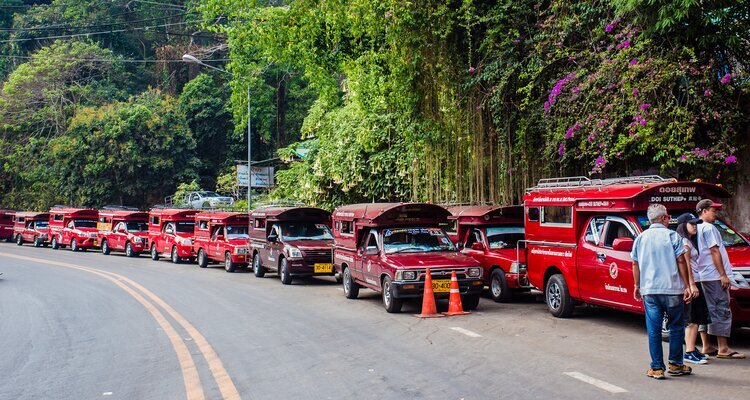 The red songthaews in Chiang Mai
If it's your first time in Thailand, it's best to skip renting a scooter. Traffic can be unpredictable, and insurance issues are common. Instead, you can use the city's new EV Smart Buses (flat 20 THB) or private car to reach temples, markets, and other attractions safely.
Getting Around Phuket/Krabi/Koh Samui
On islands like Phuket, Krabi, and Koh Samui, ride-hailing apps such as Grab or inDrive are generally safer and more transparent than negotiating with street taxis. Typical rides often cost around $10–20 USD, depending on distance.
In Phuket, the Phuket Smart Bus is a good budget option, connecting major beaches along the coast for about 170 THB.
When moving between islands, always check for joint ferry tickets, which combine transfers and boat rides in one booking and make the journey much smoother.
For more details about these islands' layout, check out our Phuket map, Krabi map, and Koh Samui map.
Want the Most Flexible Option?
If you prefer maximum comfort and flexibility, you can also contact us to book private city tours with a driver. A private car makes it easy to explore multiple spots in one day without worrying about transport, heat, or luggage.
FAQs for First-Time Visitors
Q1: Is Thai transport safe for first-timers?
Absolutely—if you stick to major airports, official train and bus terminals, and ride-hailing apps like Grab, you'll be fine. Honestly, it's way safer than the headlines make it sound.
Bangkok traffic can feel crazy, but the BTS and MRT are clean, easy, and reliable—think London Tube or Paris Metro. Outside the cities, you'll see more "local style" transport: red songthaews and motorbike taxis instead of big trains. It looks chaotic, but locals manage it every day, and you'll figure it out fast too.
Q2: How far in advance should I book transportation?
It depends on how you're traveling. For budget flights, booking 2–4 weeks ahead usually gets you the best fares ($25–40 USD).
For the new CNR overnight sleeper train on the Bangkok–Chiang Mai route, book exactly 90 days in advance via the official D-Ticket site or 12Go, as tickets often sell out within minutes in peak season.
Buses and ferries are more flexible and can usually be booked 1–3 days before departure.
Q3: Is public transport suitable with large suitcases?
Trains and large buses are the most luggage-friendly. Bangkok's BTS Skytrain and MRT Bangkok stations have elevators, and VIP buses provide large luggage storage.
Avoid minivans with big suitcases—they have limited space, and you may need to pay for an extra seat. For city transfers with heavy luggage, a Grab or Bolt SUV is usually easier.
Q4: Which apps are essential in Thailand?
These three apps make getting around Thailand much easier:
- Grab / Bolt – Grab is the most reliable overall; Bolt is often 10–20% cheaper in Bangkok and Chiang Mai.
- 12Go.asia – Best for checking schedules and booking joint tickets (bus + ferry), especially for island routes.
- Google Maps – Very accurate for navigating Bangkok's buses and metro lines.
Q5: How do I avoid being overcharged by drivers?
Simple rule: if it's not on an app, agree on the price before getting in.
In Bangkok, always insist on the taxi meter. If a driver says it's broken, just take another taxi.
On islands like Phuket or Koh Samui, where meters are rare, check Grab or Bolt first to see the typical fare before negotiating.