
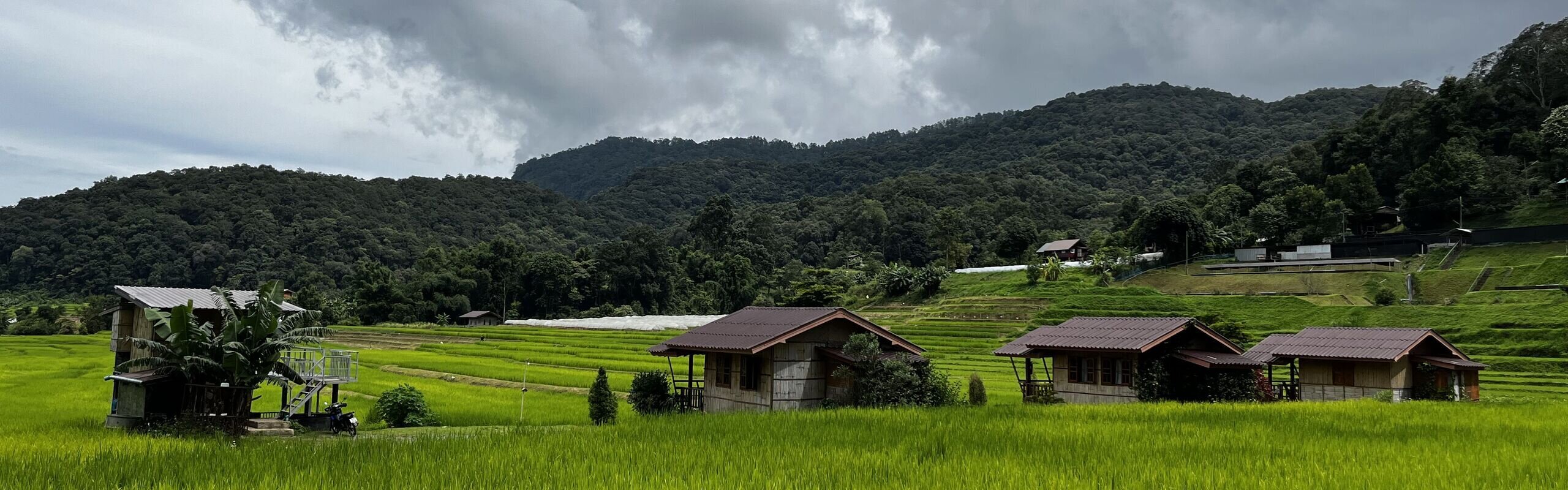
When you hear "rainy season" or "wet season," you probably think of endless grey, rainy days. But in Thailand, it's completely different.
When I traveled through Thailand last August and September, it was way more enjoyable than I expected. In Ayutthaya, I actually used an umbrella—not for rain, but to shade myself from the sun. Visiting the Grand Palace was a breeze with hardly any crowds.
So, is the rainy season a bad time to visit Thailand? Not at all. The secret to a perfect Thai getaway during the rainy season is not avoiding the rain, but knowing where to go and when.
When Is the Rainy Season in Thailand?
In most parts of Thailand, the monsoon season runs from mid-May to late October or early November.
For example, in 2025, the authorities officially marked the wet season from May 15 to early November.
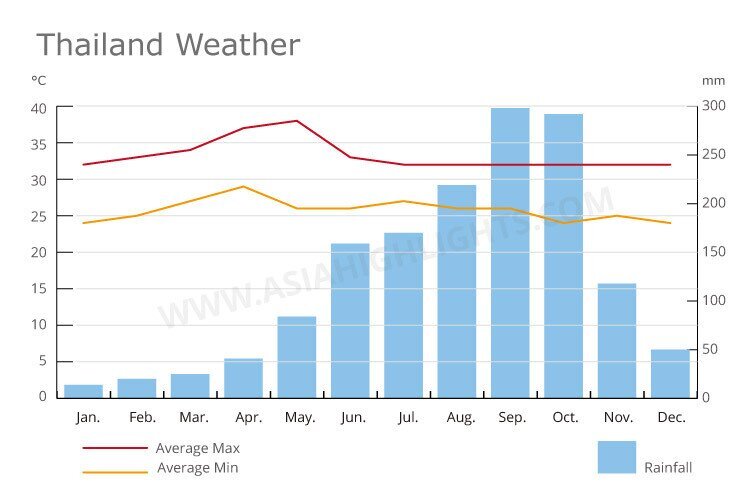
But this doesn't apply everywhere. The Gulf Coast islands, such as Koh Samui, Koh Phangan, and Koh Tao, have a distinct pattern. Their rainiest months are usually October to December.
You can think of the rainy season in three parts, each with its own vibe.
If you can choose your dates, May to August is usually the easier window.
May–June: A softer start
A good balance of weather and fewer tourists. Rain begins, but it's usually light and not too disruptive. You'll still get plenty of sun. This is a great time for couples or honeymoon trips—fewer crowds, better hotel deals, and a more relaxed pace.
July–August: Mixed but manageable
Still a good option. Rain is more frequent, but it rarely lasts all day. Many days still have sun, especially in the morning. This is peak travel time for families, especially from Europe, so planning becomes more important.
September–October (into early November): Peak rainy season
This is the wettest period, especially on the Andaman side (Phuket, Krabi). Expect heavier rain, rougher seas, and more disruption. This period suits more flexible travelers who don't mind adjusting plans in exchange for lower prices and fewer crowds.
If you want to plan your trip around the best weather, see the page Thailand's best season.
What "Rainy" Actually Looks Like
The rain in Thailand does not rain all day. In most cases, it comes in short and heavy bursts. Most days still have long dry periods.
A very common pattern is: sun in the morning, rain later in the day, often in the late afternoon (usually around 4:00 PM) or at night.
When it rains, it can be heavy. Tropical rain is fast and loud. But it often passes within 30-60 minutes. After that, you can expect a beautiful sunset and cooler evening air.
What about flooding or storms?
Flooding can happen, especially in September and October, but it's temporary and localized in most cases.
The main reason places flood most commonly in Thailand is drainage. Be it Bangkok, Chiang Mai, Pattaya, Phuket, Hua Hin, or anywhere else, a heavy downpour can overload the drains.
In low-lying areas or near rivers, water may appear, but it often drains within a few hours once the rain stops.
My experience:
I traveled through Thailand from August to September, and most days felt almost like the dry season. In the north, the weather was mostly perfect—sunny mornings and occasional brief showers that barely disrupted our plans.
In Ayutthaya, the sun was so strong I almost got sunburned, and in Khao Yai, we hiked two full days without a drop of rain, even though the trails were still wet from nighttime showers.
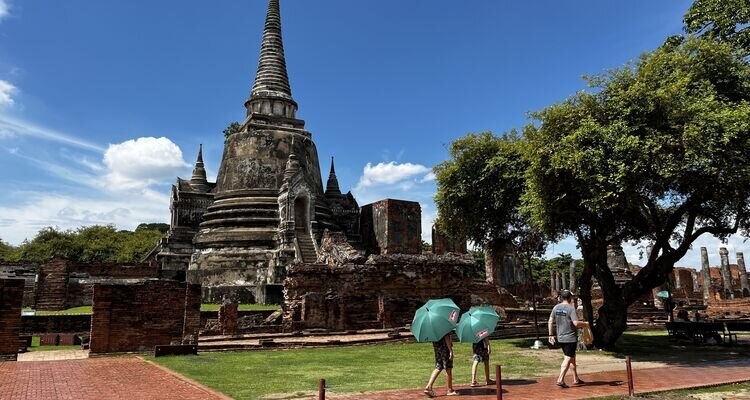 It was sunny when we visited Ayutthaya in August.
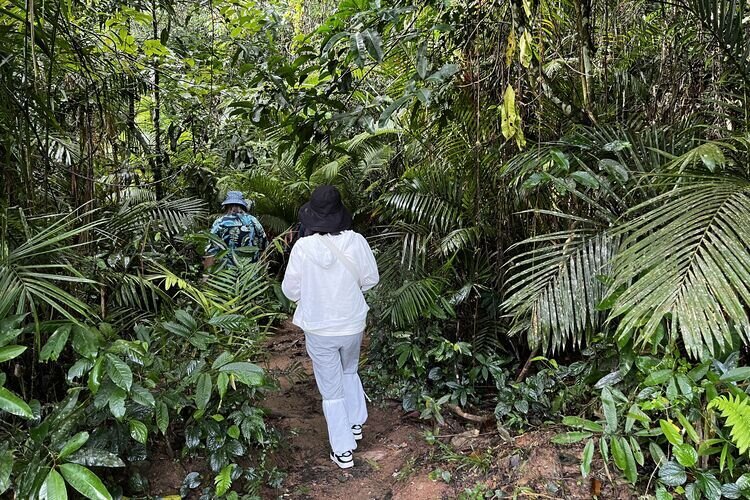 I was hiking in Khao Yai National Park during Thailand's rainy season.
Chiang Mai treated us to just a quick 30-minute rain during the elephant sanctuary visit, and in Kanchanaburi, a short afternoon shower on the floating house turned into a rare chance to slow down and just do nothing for a while.
 We visited an elephant sanctuary in Chiang Mai in early September.
The only real disruption was an evening food tour in Bangkok's Chinatown—it poured for about an hour, but we waited it out with a drink, and the streets were lively again.
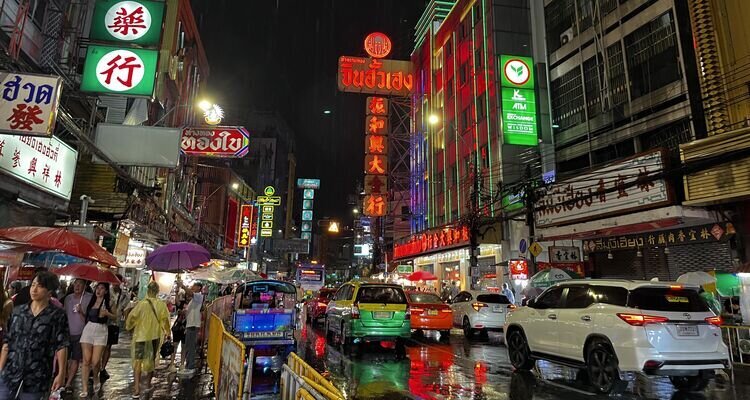 We were exploring Chinatown in Bangkok at night.
Phuket was a bit different. On the way back from Koh Phi Phi, the seas were really rough. The trip out was fine, but the return had some big waves. It was a scary experience, and something I won't be repeating!
Where It Rains Most (and Where It Doesn't)
The Thai wet season isn't the same everywhere.
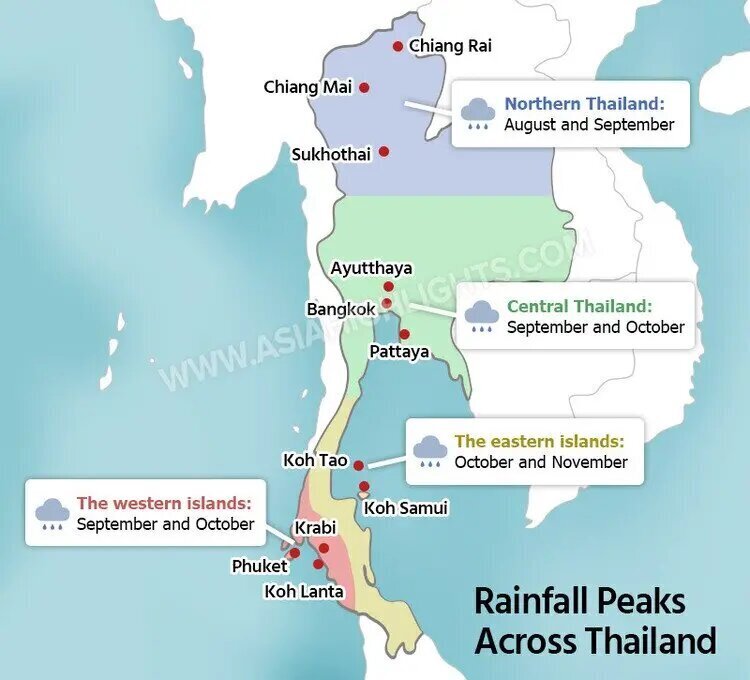
Thailand Rainy Season by Region
| Region | Rainy Season | Peak Rain | Notes |
|---|---|---|---|
| Andaman Coast (Phuket, Krabi, Phi Phi) | May – October | September - October | Rough seas, ferry cancellations |
| Gulf Coast (Koh Samui, Koh Phangan, Koh Tao) | October – December | October-November | More stable beach weather |
| Northern Thailand (Chiang Mai, Chiang Rai) | May – October | August – September | Morning sunny, afternoon showers, lush landscapes |
| Central Plains (Bangkok, Ayutthaya) | May – October | September- October | Urban attractions largely unaffected |
Rainy Season in Bangkok
In Bangkok and central Thailand, rain usually comes as a sudden downpour in the late afternoon or evening, often lasting 30–60 minutes before clearing up.
September and October are when you're more likely to see heavier rain and occasional localized flooding. This usually shows up in low-lying streets, near canals, or underpasses. It rarely lasts long. Once the rain stops, water typically drains within a few hours.
It might slow traffic or make sidewalks messy for a while, but BTS, MRT, and most central areas continue running as usual.
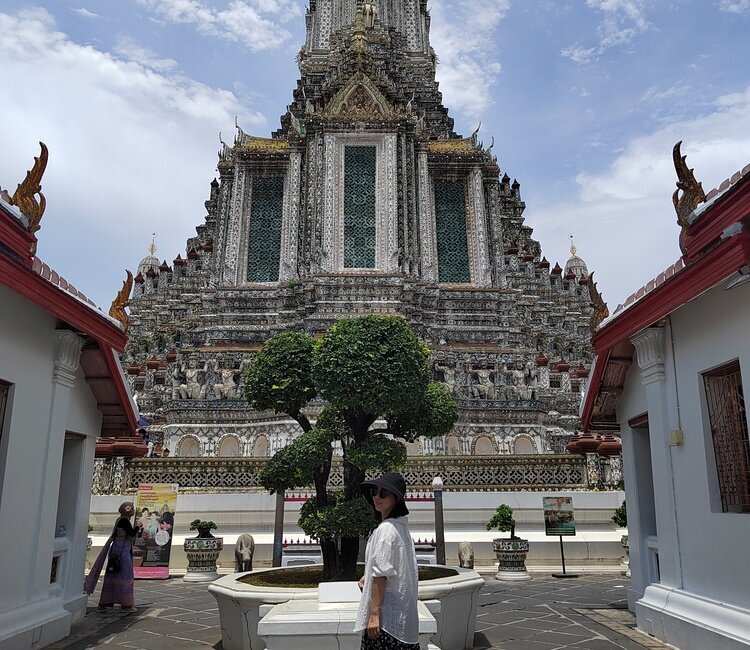 I visited Wat Arun around noon in August, and it was sunny with almost no crowds.
Rainy Season in Chiang Mai
In Chiang Mai and northern Thailand, the rainy season is generally milder than in the south. Rain often falls at night or in the early morning, leaving most daytime hours dry or lightly cloudy.
Rain increases from June onwards and peaks between August and September. During this period, you can expect more frequent showers, but they are still usually short rather than all-day rain.
Flooding is less common than in Bangkok, though areas near the Ping River can occasionally be affected during peak months. In most tourist areas like the Old City and Nimmanhaemin, the impact is usually minimal.
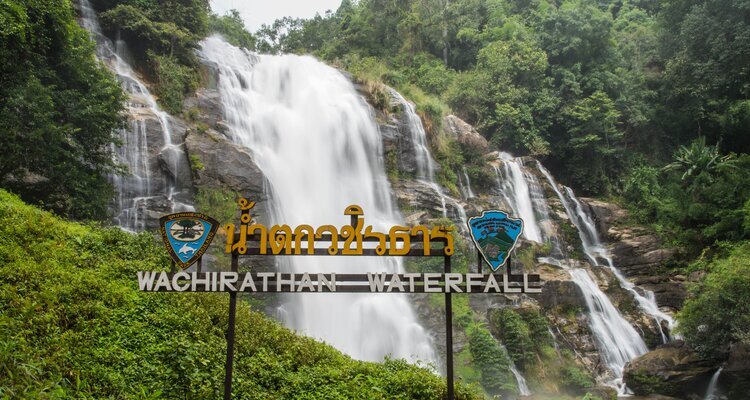 A waterfall in Doi Inthanon at full flow during the rainy season
Rainy Season in Southern Thailand: The Gulf vs. The Andaman
The Gulf Coast and the Andaman Coast feel very different in the rainy season.
Rainy season in the Andaman Coast
The rainy season typically runs from May to October, with rainfall increasing from July and peaking in September and October. During these months, you can expect heavier rain, rougher seas, and more frequent "red flag" days when swimming is not allowed.
Sea conditions are the main concern here. Waves can reach around 2 meters during peak months, and boat trips to places like the Phi Phi Islands or Similan Islands may be delayed or canceled.
Rainy season in the Gulf Coast
The Gulf Coast follows a different pattern. From May to September, it is often relatively dry compared to the rest of Thailand, with lighter and less frequent rain.
Its peak rainy season usually arrives later, from October to December, when rainfall becomes heavier and more consistent.
Suggested reading: Best (and Worst) Times to Visit Koh Samui; Best (and Worst) Times to Visit Phuket

Where to Go (and Where to Skip) During the Rainy Season
As long as you choose the right places, you can still have a great trip during the rainy season.
If your trip is more about cities and culture, places like Bangkok and Chiang Mai are very easy during the rainy season.
You can still visit temples, markets, and cafés almost as usual. Rain comes and goes quickly, so it rarely disrupts your day.
In Bangkok, it's easy to move between malls, rooftop bars, and restaurants even if it rains, or hop on a long-tail boat along the river between showers.
In Chiang Mai, the haze from the burning season is gone and the air feels fresh. Places like Doi Inthanon can feel surprisingly cool after rain. (When I visited last August, it dropped to around 13°C and almost felt like winter.) It's also a great time to visit elephant sanctuaries, when the elephants are more active in the cooler weather.
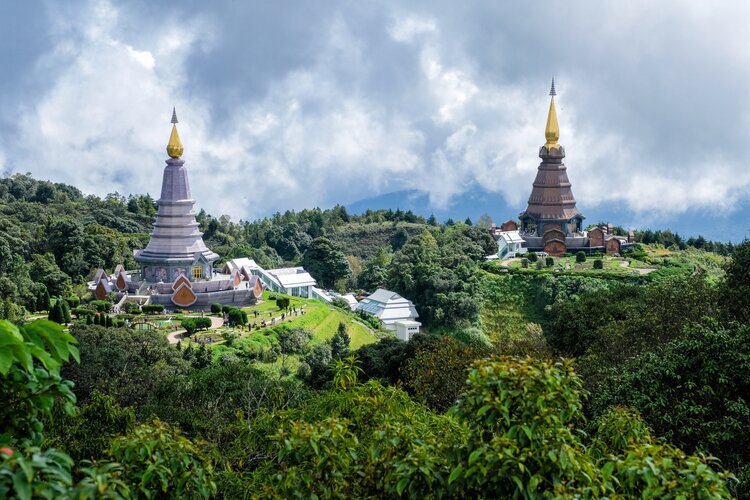 Misty mountains and lush green landscapes in Doi Inthanon during the rainy season
If you love nature, Kanchanaburi and Khao Yai are at their best this time of year.
Waterfalls are full, the forests feel alive, and everything looks incredibly green. It's a great time for light hiking, scenic drives, or simply slowing down. You can stay in a floating house, waking up to mist over the river, and spending a slow afternoon doing nothing with someone you love.
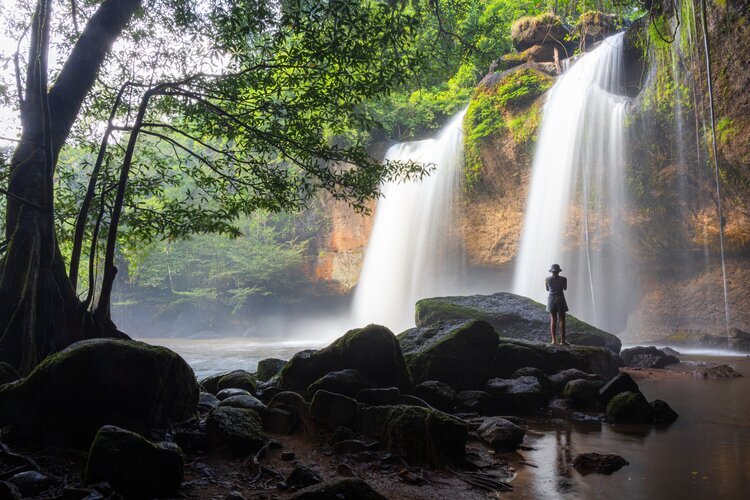 Haew Suwat Waterfall in Khao Yai at its fullest during the rainy season
If you're looking for beach time with fewer weather worries, the Gulf Coast (like Koh Samui) is your safest bet.
Islands like Koh Samui, Koh Phangan, and Koh Tao tend to stay sunny with calm seas from May to September. Mornings are perfect for swimming, snorkeling, or paddleboarding, with calm water that's easy and enjoyable even if you're traveling with kids.
Resorts here are well set up, so even if there's a short shower, you can easily switch to a long lunch, a spa session, or just relax by the pool without it affecting your day too much.
If you're set on the Andaman Coast, it's still doable. But it works better if you're happy to slow down and enjoy your resort. Think pool villas, spa afternoons, long meals, and watching the ocean change with the weather.
Island hopping and snorkeling trips are more weather-dependent, especially from September onwards, so it's best to keep plans flexible rather than packing your itinerary too tightly.
Where you should skip (or think twice)
Andaman Coast islands
If your main goal is daily island hopping, snorkeling, and perfect turquoise water, avoid the Andaman Coast (Phuket, Krabi, Phi Phi) in September and October. Places like Phi Phi Islands or Similan Islands are heavily weather-dependent, and this is when cancellations are most likely. More remote islands like Koh Lipe can also be harder to reach, with boat transfers affected by rough seas.
Mountain and rural areas
In areas like Mae Hong Son and part of Khao Sok, heavy rain can make roads slippery or flood certain sections. Some trails or boat trips may be temporarily closed, and travel times can be longer than expected.
If you're unsure, just tell us your travel style, and our travel consultant can help you pick the best route for your dates.
To help you decide where to go, see our guide on the best places to visit in Thailand in July and the best places to go for families in August.
Why You Might Actually Love Thailand's Green Season
Yes, you do have to make a few compromises during the Thailand monsoon season. But you also get a lot in return.
Some of my best Thailand experiences happened in the green season. I once fed 10 elephants with just five other people—more elephants than tourists. And at the Grand Palace, I could actually take photos without a crowd in the background. That almost never happens in peak season.
1. You actually get space
This is the biggest difference.
In peak season, places like Maya Bay or the Grand Palace can feel packed. In the green season, everything just slows down.
You can stand in a temple in Ayutthaya or walk along a beach in Koh Samui and not feel rushed. Sometimes it even feels like you have the place to yourself.
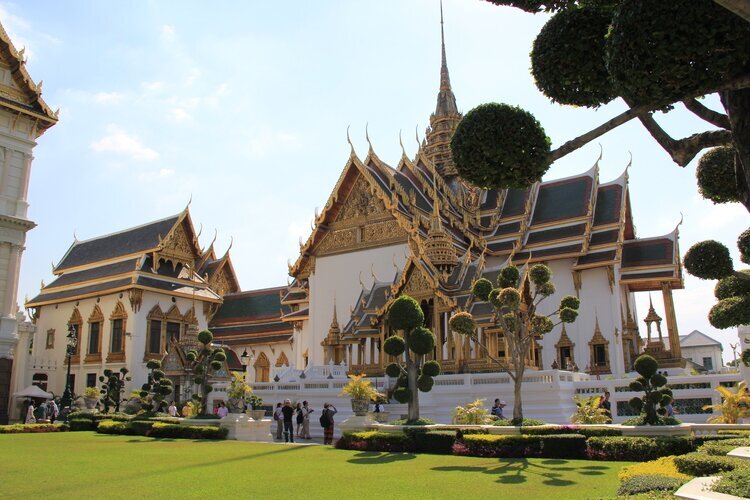 Grand Palace in Bangkok during the rainy season on a sunny morning with fewer crowds
2. Your money goes further
This is when Thailand really feels like good value.
The same budget that gets you a standard room in peak season can often get you a pool villa instead.
For example, at places like Banyan Tree Phuket or Six Senses Yao Noi, pool villas that usually go for around $800–$1,000+ per night in high season can sometimes drop to $400–$600 range during the rainy months.
3. Everything looks alive
This is probably the most underrated part.
In the dry season, some places can look a bit dusty. But during the green season, everything is just better.
Rice fields turn bright green, waterfalls are full, and the air feels clearer. It's the best time for photos.
How to Travel Smart During the Rainy Season
1. Plan mornings for outdoor activities
Rain usually hits in the afternoon or evening. Temples, city tours, and hikes are best in the morning. If it rains later, switch to cafés, malls, or museums.
2. Pick the right islands
Gulf Coast (Koh Samui, Koh Phangan, Koh Tao) stays sunny and calm from May–September.
Andaman Coast (Phuket, Krabi, Khao Lak) can be rough from July–October—focus on resort stays and flexible activities.
3. Leave buffer in your schedule
Don't cram too much into one day. Leave some free time so you can shift plans if it rains.
FAQ — Thailand Rainy Season
Q: Will it rain all day in Thailand during the rainy season?
A: No. Rain typically comes in short bursts, often in the afternoon or evening. Morning hours are usually dry and sunny, especially outside the peak monsoon months.
Q: Can I still enjoy outdoor activities during the rainy season?
A: Yes. Morning hours are often dry, making sightseeing, temple visits, and urban exploration possible. Outdoor nature activities like waterfalls and national parks can be especially beautiful, though heavy rain may occasionally affect travel in rural areas.
Q: Is it still worth going to Thailand during the Thailand wet season?
A: Absolutely—for many travellers it's still a great time. You'll find fewer crowds, lower prices, lush green landscapes, and plenty of things to do even if it rains.
Q: Which islands are best in July/August?
A: During July/August, islands on the Gulf Coast—like Koh Samui, Koh Phangan, and Koh Tao—tend to have lighter rain and calmer seas, while the Andaman Coast is wetter.
Q: Will it ruin my holiday?
A: Not at all—if you plan smart. Most rain comes in short bursts, not all-day downpours, so a little shower usually won't stop your plans. Just have some indoor backups ready and keep your schedule flexible. Unless a typhoon hits (rare), wet season is actually a great time to visit.
Q: How should I prepare for a trip during the rainy season?
A: Be ready for weather changes: pack a compact umbrella or lightweight rain jacket, waterproof footwear, and quickdry clothing. Keep some indoor plans handy and check weather forecasts for each region you visit.
Travel with Us to Thailand with Ease
Let us help you have a smooth trip. Our Thailand travel consultants can suggest the best routes, accommodations, and experiences for this season.