
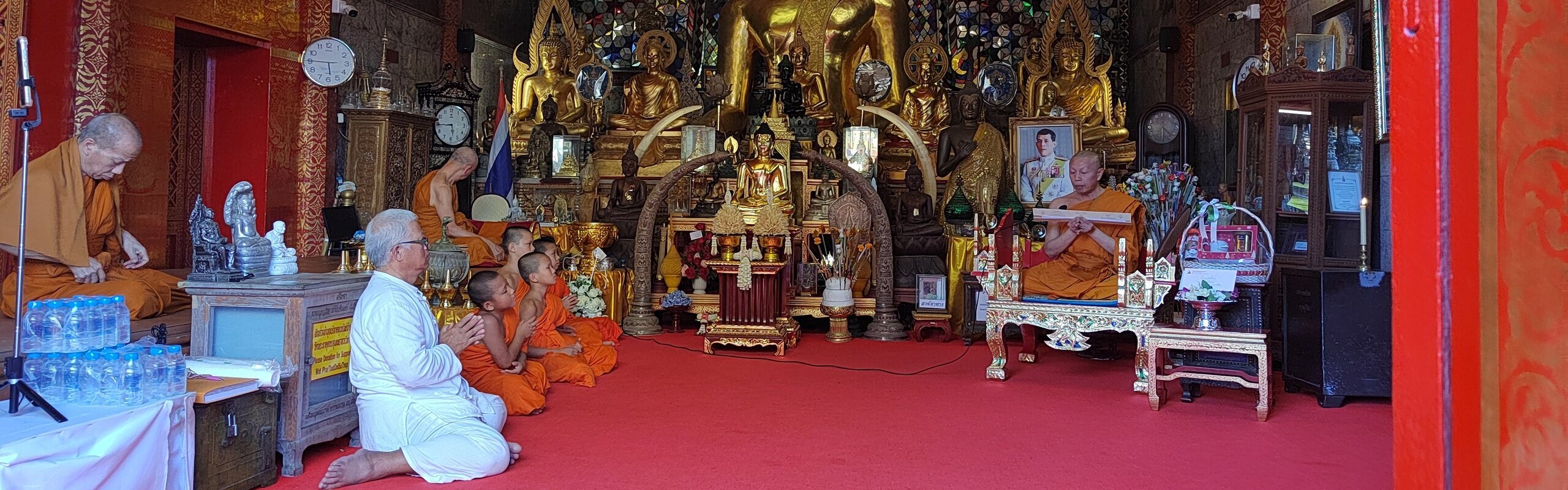
The Best Way to Experience Chiang Mai's Buddhist Culture Isn't Temple-Hopping
Travel Consultant Turned Editor
Temple-hopping shows you what Chiang Mai's Buddhist culture looks like, but not how it is lived.
If you want to understand Buddhism beyond temple architecture and tourist explanations, these are the experiences I'd consider:
- Morning almsgiving: Do it. Free, no booking, and it shows how locals practice Buddhism every day.
- Monk chanting: Combine it with your temple visit. Free, no booking, and it gives you a chance to see the temple in use.
- Monk Chat: Do it, but pick the right one. A real conversation with a monk beats any plaque.
- Meditation: The half-day course is fine, and the retreats are not for a short trip.
- A festival: Do it if your dates align. It's the only one that shows Buddhism at community scale.
Morning Almsgiving: See Buddhism in Everyday Chiang Mai
Is Almsgiving worth waking up early for?
Yes! It is the easiest way to see Buddhism as part of everyday life in Chiang Mai.
Hit the streets around 6:00 am for Chiang Mai's morning almsgiving (Tak Bat). You'll see locals prepare bags of food, kneel, place it into the monks' bowls, receive a blessing, and return to their day.
I got my most impressive moment near Wat Chedi Luang. I saw a couple pull up on a scooter, make an offering, and ride on. For a moment, it felt so real.
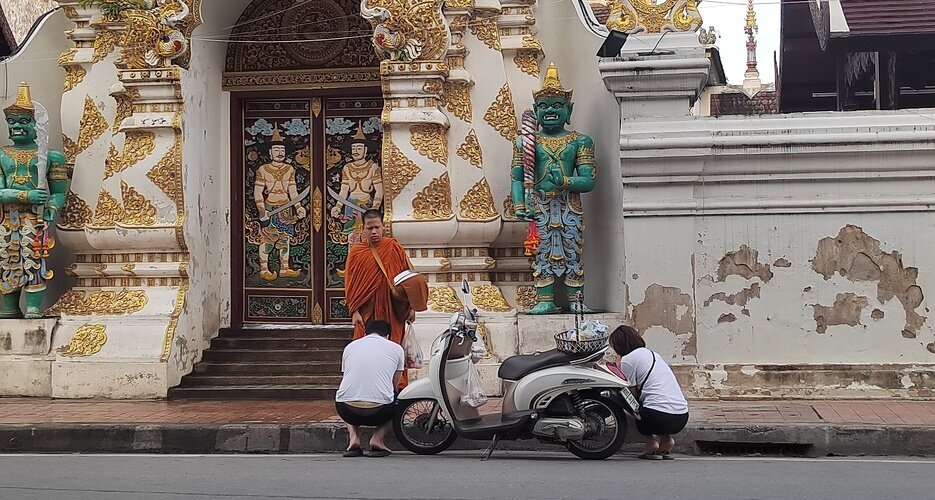
While most tourists are still asleep, you will capture the city’s most authentic moment as well.
Where can I see/join in almsgiving in Chiang Mai?
If you want to see almsgiving in Chiang Mai, I’d make Doi Suthep your first choice.
Get to the base of Doi Suthep near the Kruba Sri Wi Chai statue around 6:30 am. On most mornings, you'll see dozens monks walking in a line as locals wait to give them food.
Don’t want to make the half-hour trip to Doi Suthep? You can also come across almsgiving in the Old City.
It’s less predictable, but weekends give you a better chance: Wat Chedi Luang on Saturday and Wat Phra Singh on Sunday.
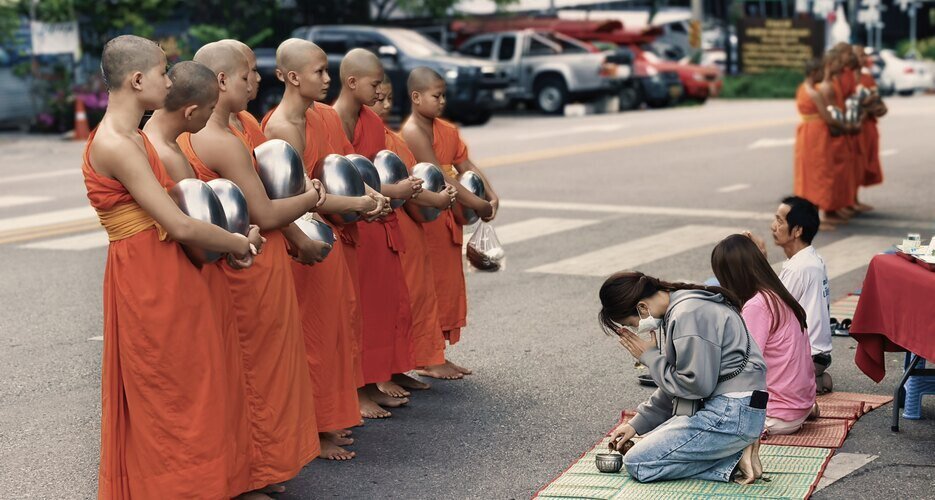
How to do it right:
- Bring simple, ready-to-eat food. Fruit, rice, or packaged food are good choices. You can prepare it beforehand or buy it at 7-Elevens near the route.
- Lower yourself when the monk approaches, place the food in the bowl, and don't touch him. Women should especially avoid any physical contact or direct hand-off.
Monk Chat: Have a Question? Ask a Monk
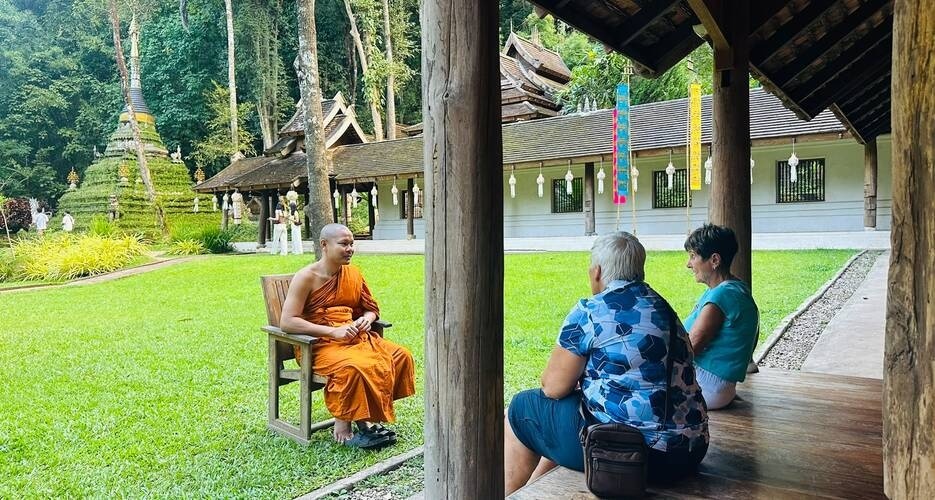
Ever wondered what life is really like for a monk? Ask one. Monk Chat is your chance to ask the questions a normal temple tour can't answer.
You get to hear firsthand about monks’ everyday life, what he personally believes, and how Buddhism shapes the way he lives.
But the trickiest part is that it is not available at every temple, every day. Some old schedules online can be misleading, too.
Where Can I Talk to a Monk in Chiang Mai?
Wat Chedi Luang and Wat Suan Dok are the two most reliable places for Monk Chat.
- Wat Chedi Luang: around 10 am daily
- Wat Suan Dok: Monday–Friday, 4–7 pm
For first-timers, I highly recommend Wat Chedi Luang.
Right in the Old City, you can easily add it to your city tour. Then you’ll talk with the monk in a quieter corner of the temple. It’s more atmospheric than the classroom setting at Wat Suan Dok.
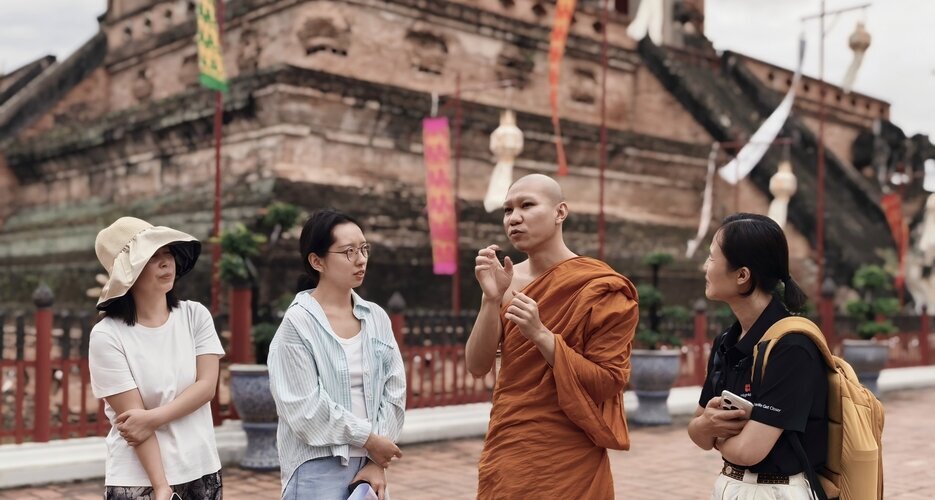
Instead of sitting down for a short chat, we can arrange a more immersive experience: let the monk be your guide.
Walk through the temple together, ask questions as you go, and learn about the rituals around you. You’re not limited by the temple’s regular Monk Chat schedule, either.
Just reserve with us at least 2 weeks ahead.
Monk Chanting: See a Buddhist Service in Progress
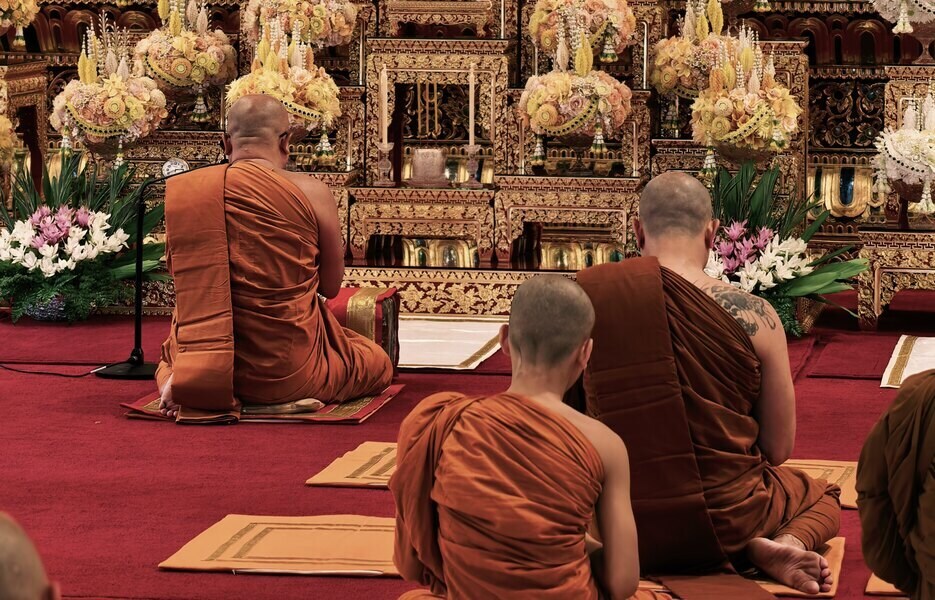
Stay for the chanting, and you’ll see how a temple is used for daily Buddhist practice.
You can sit quietly while monks lead prayers and local worshippers kneel with their heads bowed, quietly reciting along. You don't need to understand the chants or take part. Just watch and listen.
Chanting usually happens around 8 am or 5–6 pm, but the exact time and whether visitors can observe vary by temple.
If you want an easy option in the Old City, Wat Phra Singh is our pick.
If you want the most ceremonial atmosphere, arrive Wat Phra That Doi Suthep before 5:30 pm (the chanting hour).
A Buddha relic is enshrined there, so you can see rituals you won’t find at other temples. Stay after dark, and the city lights below are an extra bonus.
Slow Down and Practice Meditation
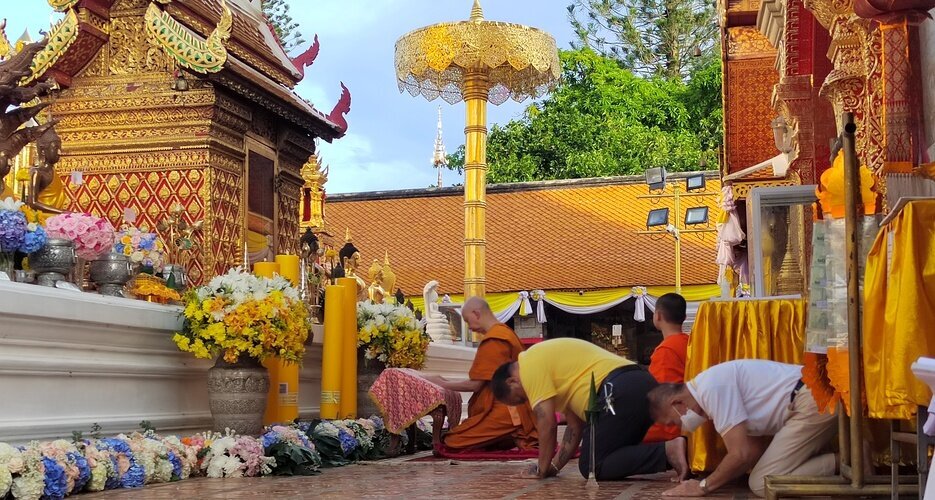
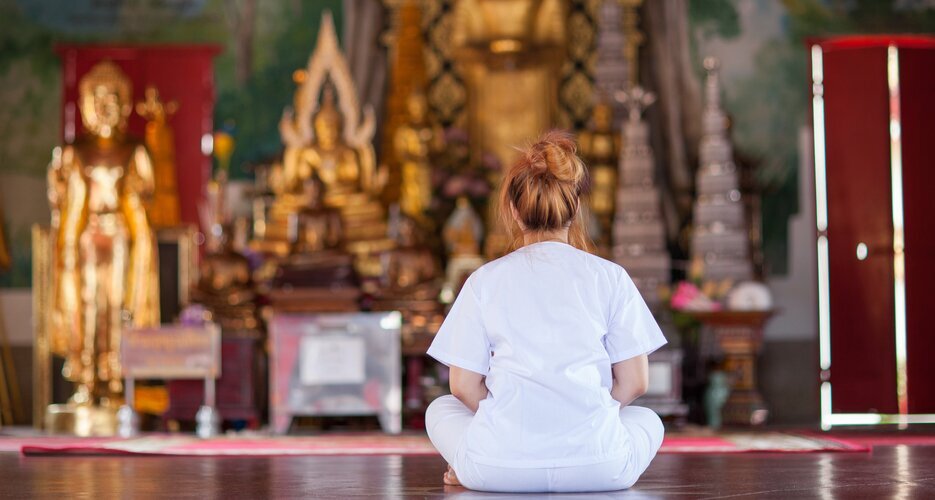
Curious what meditation is actually like for a Buddhist monk? Try it in a working temple, with a monk showing you how.
You’ll learn simple sitting and walking meditation, then have time to practice yourself.
For a few hours, you’re taking part in one of the practices that shapes everyday monastic life.
Only have a few hours? Choose Wat Suan Dok.
Wat Suan Dok is the only option in Chiang Mai for a monk-led half-day meditation experience, making it a good fit for a short trip.
The half-day course runs Monday afternoons, 1:30–5 pm. A one-day option is available on Fridays.
You don't need any experience, but you do need to book ahead. There is no fixed fee, though donations are encouraged.
Want to spend several days actually practicing?
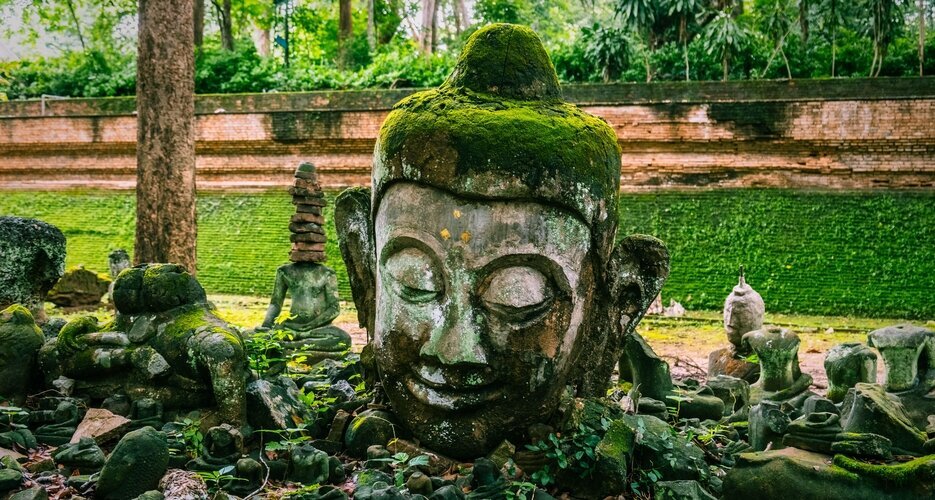
Choose Wat Ram Poeng or Wat Umong. These are real Buddhist retreats and require at least 3 days.
Expect simple accommodation, basic vegetarian meals, early mornings, more meditation sessions, silence, and a strict daily routine.
You'll need to book ahead. Expect to pay around US$10–15 per day.
On Festival Days: See Buddhism at Community Scale
If your trip happens to fall during a festival, especially a Buddhist one, go. You won't get this scale of Buddhist life on a normal temple visit.
A normal day shows you individuals practicing Buddhism. A festival shows you what it looks like when an entire community does it together.
Makha Bucha: See Buddhism at Its Most Ceremonial
For the most powerful ritual experience, choose the Buddhist festivals. Makha Bucha (February 21, 2027) is a great pick.
You’ll see thousands of worshippers gather with candles, incense, and flowers. Then the monks lead everyone in three slow circles around the temple, with chanting filling the night.
Songkran: Buddhism Meets Thai New Year
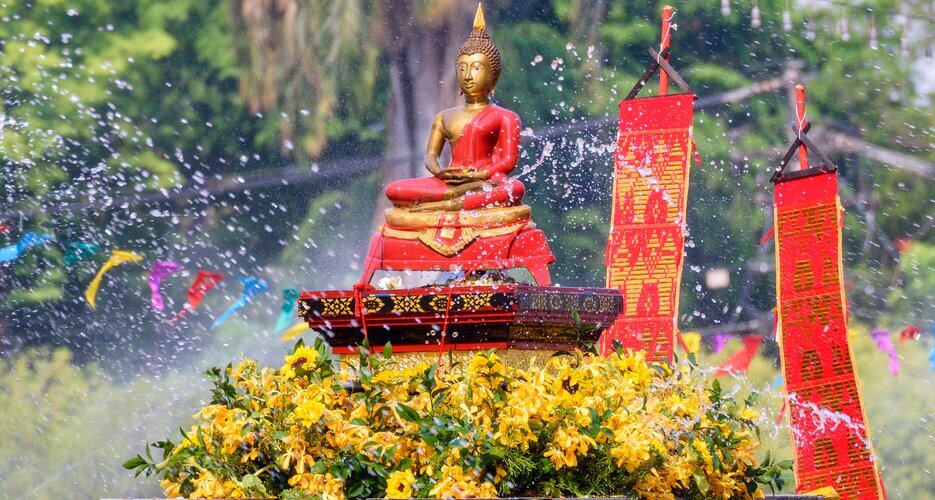
For a broader look at how Buddhism fits into Thai celebrations, choose Songkran (April 13–15).
April 13 is the day when Buddhist traditions are most visible.
Dozens of floats carrying Buddha images wind through the Old City. Locals line the route to pour scented water over them and ask for blessings.
Don’t miss Wat Phra Singh or Wat Chedi Luang. You’ll see families bathing Buddha images, building small sand pagodas, and making offerings to monks.
FAQ: Buddhist Culture in Chiang Mai
Q1: Is the alms round every day, even in rain?
Yes. Morning almsgiving is a daily practice in Chiang Mai, and monks generally continue their alms rounds on wet mornings too.
Q2: Do I need to be Buddhist to join in?
No. Monks welcome anyone who comes with respect.
For alms giving, the act of offering is what matters, not your own faith. The meditation course is built for beginners of any religion.
Q3: Can I just show up for evening chanting?
Yes. Old City temples like Wat Chedi Luang and Wat Phra Singh chant daily around 5–6 p.m.
Walk in, remove your shoes at the hall, sit at the back. No booking, no cost.
Q4: Is Monk Chat available year-round?
At Wat Chedi Luang, yes, daily from 9 a.m. to 6 p.m. Wat Suan Dok's schedule shifts by season and pauses on Buddhist holy days (wan phra), so ask your hotel before or travel with us for a hassle-free trip.
Q5: What should I wear?
Cover shoulders and knees for all Buddhist experiences. A T-shirt with long pants or a long skirt is fine. No tank tops, shorts, or sleeveless tops. Remove shoes at temple entrances.
Experience Chiang Mai Beyond the Temples
You don't need to turn your trip into a Buddhist retreat. Pick one experience that matches your interests and build it into your sightseeing.
For a hassle-free experience, contact us to tailor-make it for you.
You can also explore the best time to visit Chiang Mai, discover more things to do in Chiang Mai, or start planning a trip to Chiang Mai with our recommended Chiang Mai tours.