
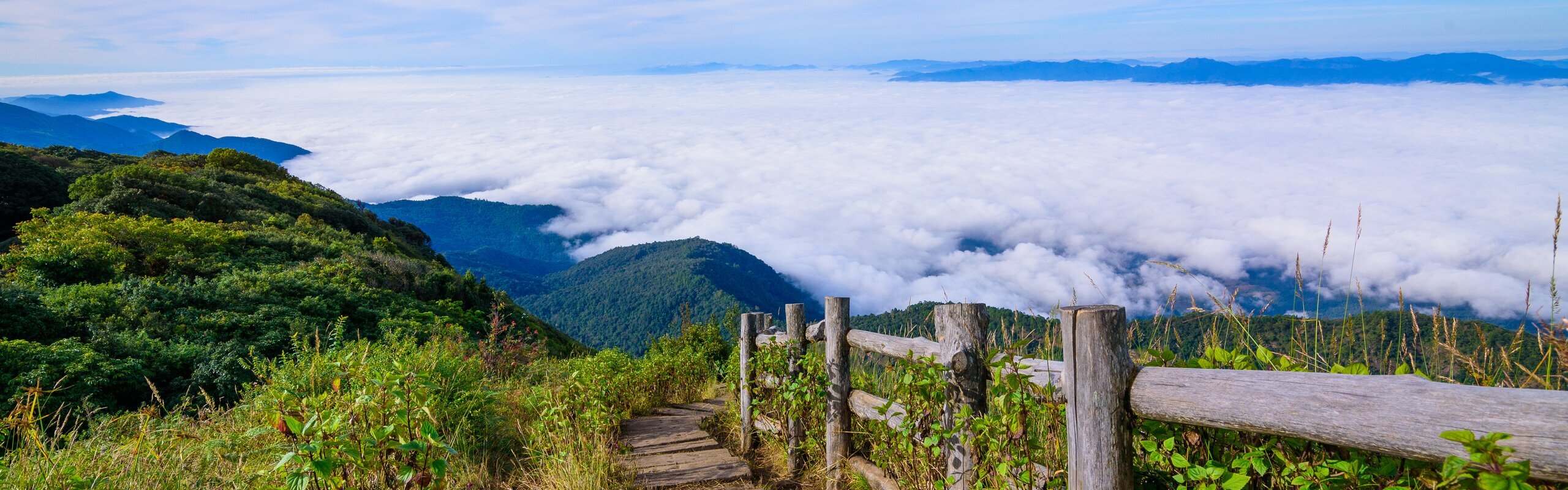
Why I Recommend Spending a Full Day at Doi Inthanon

Travel Consultant Turned Editor
Most articles introduce Doi Inthanon as Thailand's highest mountain and recommend the famous landmarks like the Highest Point and the Twin Pagodas.
They're right. Both are worth visiting. But if those are the only places you see, you'll miss what makes Doi Inthanon truly special.
The real appeal lies in exploring the mountain itself and experiencing the landscapes and local communities beyond the roadside viewpoints.
Doi Inthanon deserves a full day—but only if you spend it the right way.
In this guide, I'll show you exactly how to make the most of your day.
Is Doi Inthanon Worth One Day of Your Chiang Mai Trip?
Yes — if you want to feel the natural side of Northern Thailand.
No other day trip around Chiang Mai combines this much variety in one place.
Within a few hours, you'll leave Chiang Mai's warm valley behind for air that's often 10–15°C cooler, hike through cloud forests, stand at Thailand's highest peak, and explore waterfalls, rice terraces, and Karen villages along the way.
The trade-off is the journey. Expect a 1.5–2-hour drive each way, so I wouldn't recommend it if you only have one or two days in Chiang Mai. But if you have three or more days, just go there.

My Recommended One-Day Route at Doi Inthanon
For most first-time visitors, I recommend combining four experiences: a nature trail, a Karen village, Thailand's Highest Point, and the Twin Pagodas. Among them, I would prioritize the trail and village experience.
Recommended route:
Pha Dok Siew Nature Trail → Mae Klang Luang Karen Village → Thailand's Highest Point → Twin Pagodas
I recommend this order because it lets you experience the mountain before the crowds arrive. Most tours visit the summit and Twin Pagodas first, but the trails are the most immersive part of Doi Inthanon and are best enjoyed in the cooler morning hours.
Start with Pha Dok Siew Nature Trail
Pha Dok Siew is my top choice for first-time visitors because it combines nature and local culture in one easy route.
The 1.5-hour trail takes you through cloud forest, streams, waterfalls, rice terraces, and coffee farms before ending at Mae Klang Luang Karen Village.
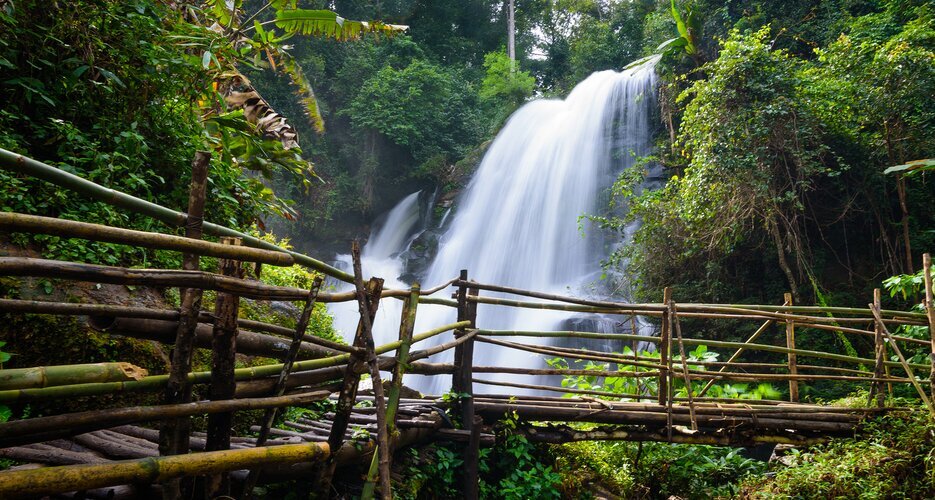
Here, you can have lunch, try local Arabica coffee, and see mountain village life without making an extra detour.

Finish with the Summit and Twin Pagodas
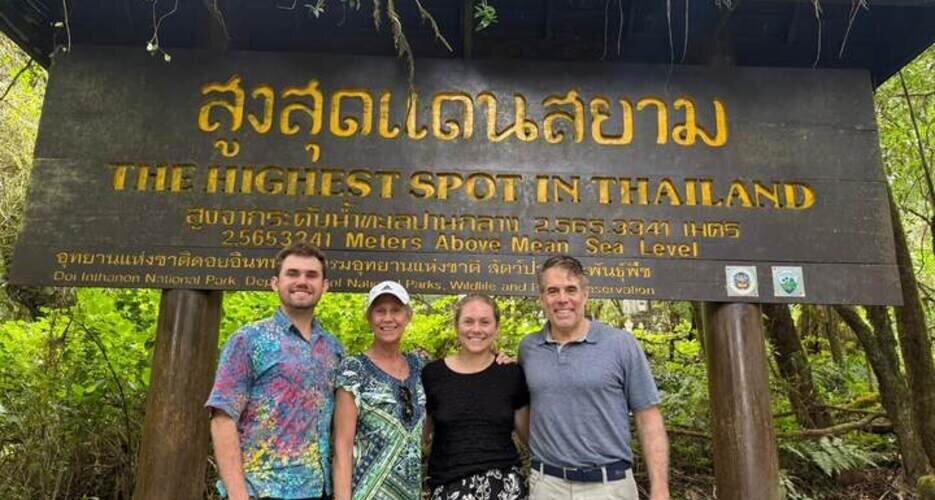
After lunch, continue uphill to Thailand's Highest Point and the Twin Pagodas.
By then, many morning tour groups have left, making these famous viewpoints more enjoyable. Clear days bring mountain views, while cloudy days create a misty highland atmosphere.
Choose Another Trail If Your Priority Is Different
Pha Dok Siew is my recommendation for most travelers, but Doi Inthanon has other options depending on what kind of experience you want.
Prefer an easier walk? Choose Ang Ka Nature Trail.
This 30-minute boardwalk is ideal for families, older travelers, or anyone who wants a gentle introduction to Doi Inthanon. You'll step straight into the cloud forest, with moss-covered trees, ferns, and birds all around.

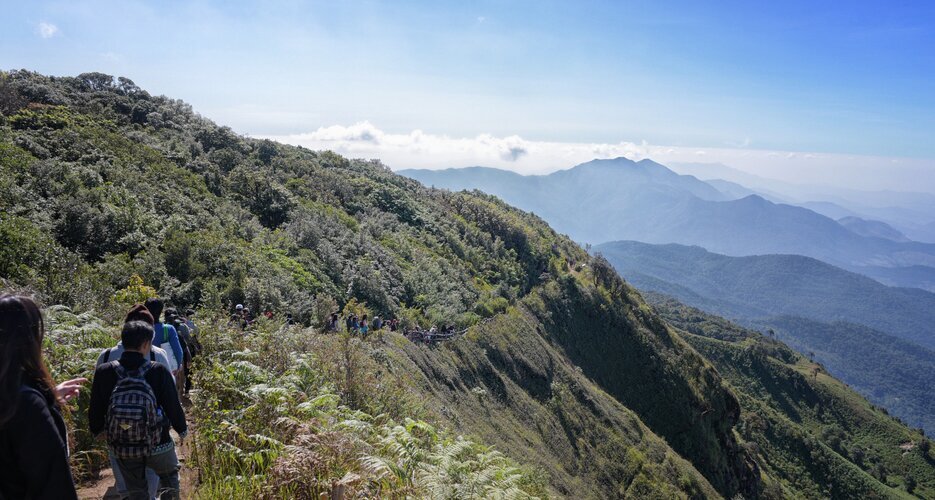
Want the best mountain views? Choose Kew Mae Pan Nature Trail.
This 2–3 hour ridge walk is more demanding but offers the most dramatic scenery, with open mountain views and the chance of seeing a sea of clouds on clear mornings.
Note that it is closed during the rainy season (June–October).
Best Time to Visit Doi Inthanon National Park
If you want to see Doi Inthanon at its best, I strongly recommend visiting it between November and February.
The trails are dry, the weather is comfortable, and you have the best chance to see misty forests and sea clouds.
December and January are my favourite months. I love seeing locals harvest coffee, and the seasonal blooms like cherry blossoms and rhododendrons.
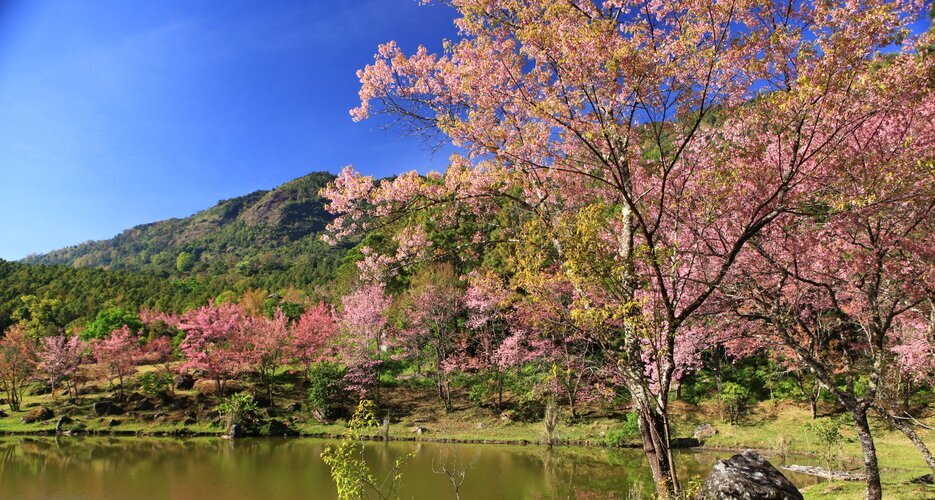
If you are travelling in the hot season (March–May), think about what you want from your visit.
If you just want to escape Chiang Mai's 40°C heat, go for it. Up here, temperatures can drop to around 15°C.
However, March and April are burning season, so haze can affect visibility. If you go for scenery, avoid these months.
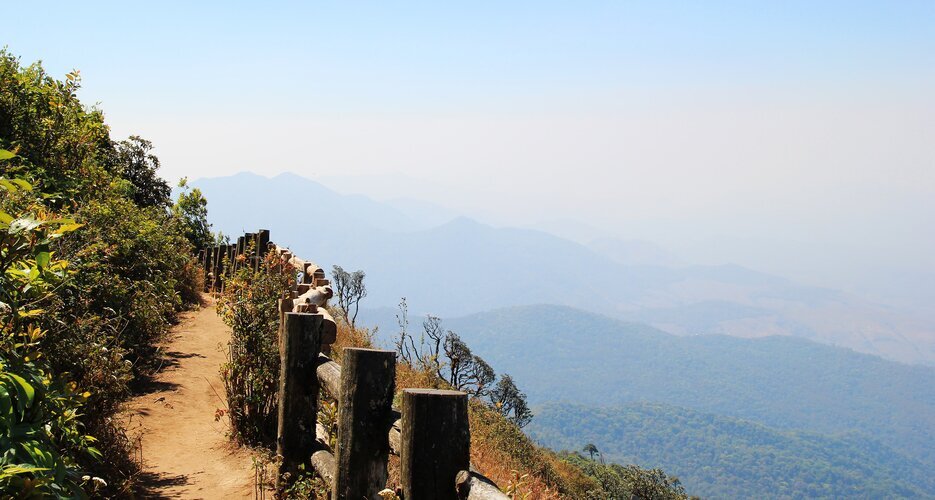
Many people avoid mountains during the rainy season (June to October), but it's underrated.
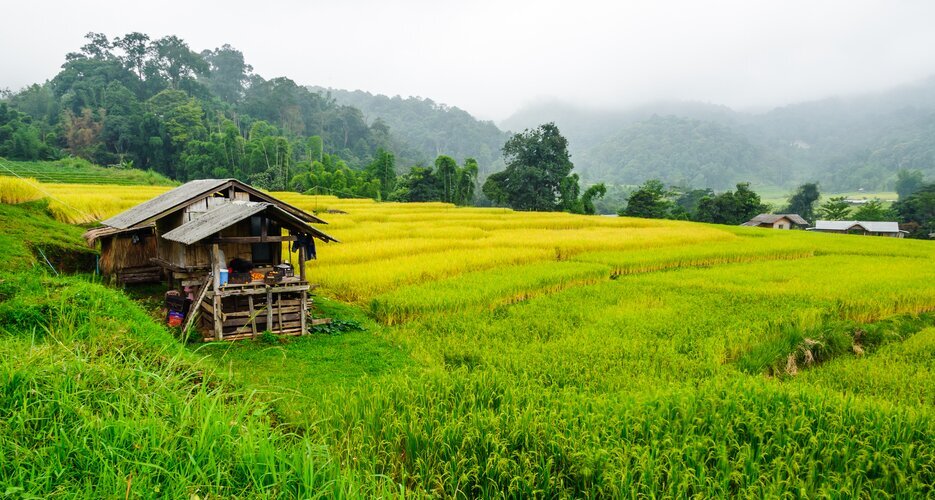
Sure, Kew Mae Pan is closed for the season, and trails can be slippery, but everything else is open as usual.
In return, you'll get the greenest forests, fullest waterfalls, vibrant rice terraces, fewer crowds, and misty mountain scenery.
Things I Wish More First-Time Visitors Knew
Plan your transportation in advance
There is no direct bus from Chiang Mai to the mountain. For most travelers, a private transfer or guided day tour is the easiest and most comfortable way to visit.
Renting a scooter may seem like a flexible option, but I don't recommend it. The winding mountain roads are potentially unsafe, and the four-hour round trip to Chiang Mai can be tiring.
Pack an extra layer (Yes, even in the middle of summer!)
While Chiang Mai can be hot, temperatures at the top are often 10–15°C cooler (sometimes more). In winter mornings, it can drop to single digits or near freezing.
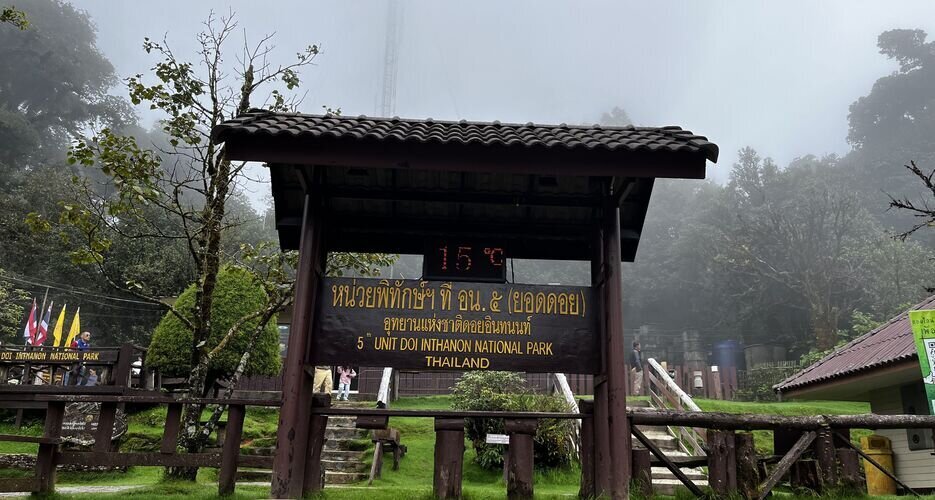
Take it from me: I made the mistake of going up in August in just a t-shirt. It was 15°C at the top, and I was shaking the entire time.
Treat Doi Inthanon as a Mountain Experience, Not a Viewpoint Visit
Doi Inthanon has its own climate and weather changes quickly. A clear morning in Chiang Mai does not mean clear skies at the top. Clear views are never guaranteed, even in the cool season.
Instead, build your day around experiences that are still worthwhile even when the views are not clear: walking through the cloud forest, hiking a nature trail, and stopping at a local highland village.
Ready to Explore Doi Inthanon?
Whether you prefer an easy scenic day, a nature-focused hike, or a deeper cultural experience, we can help you design the right Doi Inthanon itinerary.
Tell us what you enjoy, and we'll take care of the details.