
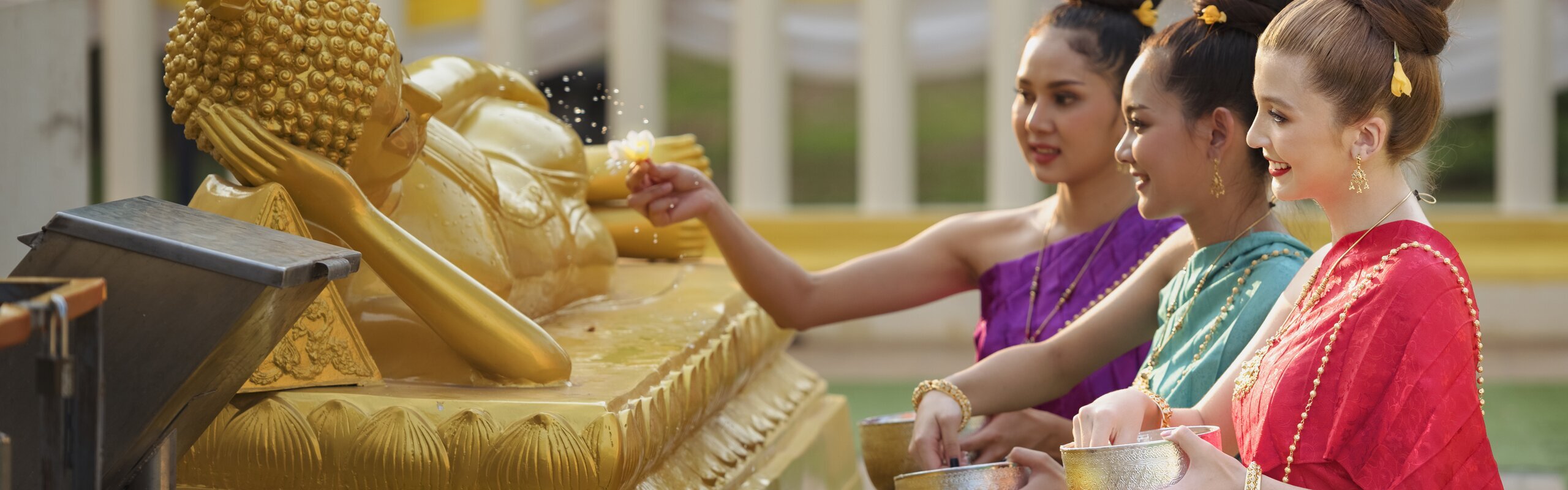
Songkran Festival is Thailand's New Year, celebrated every year from April 13 to 15.
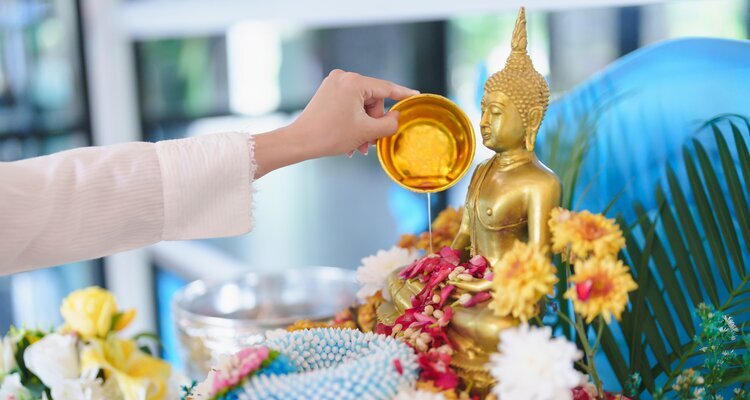
Songkran means "to move" or "to pass into". The tradition of pouring water is a way to show blessings and respect. Today, Songkran is both Thailand's most important traditional festival and the most famous water festival in the world.
This guide is based on our own Songkran experiences and years of planning trips for our customers. Follow us to discover where to go, how to avoid the worst crowds, and how to experience the festival beyond chaotic water fights.
When is the Songkran Festival?
Officially, Songkran runs from April 13–15 every year. April 13 is the key day when the main rituals happen and the water fights begin.
In major cities like Bangkok and Chiang Mai, water fights usually last throughout all three days. In party-heavy Pattaya, celebrations even continue until April 18–19.
In smaller cities and islands, like Kanchanaburi, Koh Lanta, and Lampang, water fights are typically concentrated on April 13 only.
Is It Worthwhile to Travel to Thailand during Songkran?
Yes! If you want to see Thailand at its most lively and real, Songkran is absolutely worth it.
There are no tickets, no stages, and no "tourist version" of this festival.
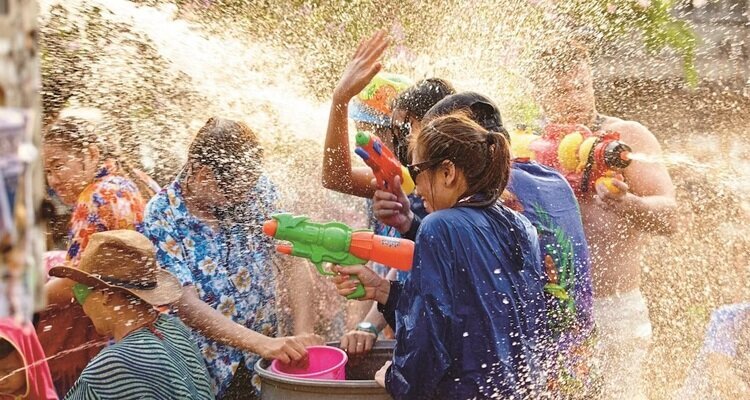
You just step outside, and you're in it. Walk down a local street and someone will probably splash you with a bucket of water, laugh, and wish you good luck. Kids chase each other with water guns, and before you know it, you've got a bit of white powder on your face — all part of the blessing.
It's not just water fights, either. You'll also run into colorful parades, locals in traditional outfits, flower-covered floats, and music drifting through the streets. It's messy and cheerful.
If crowds, heat, or getting soaked really aren't your thing, Songkran itself might not be your ideal festival. But it's still a fine time to travel in Thailand.
Most of the festival fun is limited to a few streets. Only the main water-fight areas, like Silom in Bangkok, get chaotic, mostly between 11 AM and 4 PM on April 13. Outside these zones, attractions stay open and sightseeing runs much as usual.
Flights and trains operate normally but sell out faster, so avoiding city changes during the peak festival days keeps things simple.
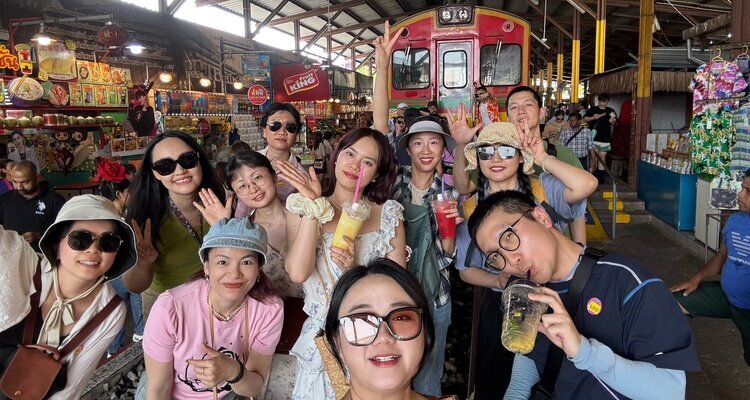 Peaceful Maeklong Railway Market in Bangkok, from our Songkran visit
Where Is the Best Place to Celebrate the Songkran Festival in Thailand?
Bangkok may be the most famous place to celebrate Songkran, but if you're looking for a deeper, more cultural experience — not just water fights we recommend you go to Chiang Mai.
1. Chiang Mai: Songkran at Its Most Cultural
Chiang Mai isn't as loud as Bangkok, but it's where you can feel both the festive spirit and Thailand's traditions at the same time.
You can wander the Old City streets and join friendly locals in splashing water, and experience the old city's temples holding serene rituals.
At Wat Phra Singh, join the Buddha Bathing Procession. Sacred Buddha images are carried on flower-covered floats slowly moving amidst musicians and Lanna dancers. Locals will gently pour blessed water, scented with flower petals, over the Buddha images.
At Wat Lok Moli, together with locals, pass blessed water hand-to-hand in bamboo tubes along ropes, ascending to the ancient chedi to make a sacred offering.
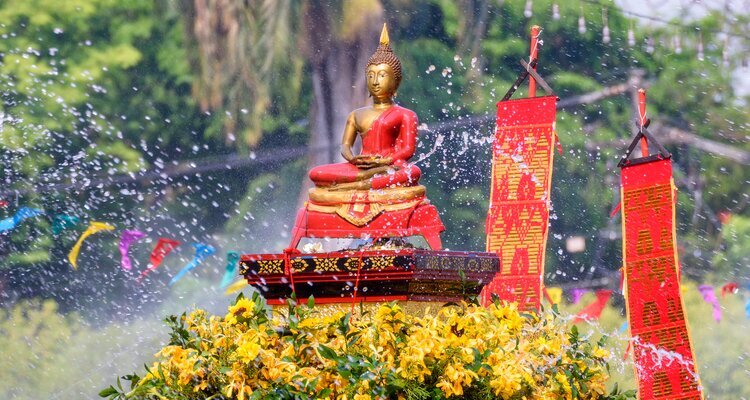 Songkran Buddha Bathing Procession in Chiang Mai
2. Bangkok: The World's Largest Songkran Playground
Bangkok offers the most intense version of Songkran — bigger crowds, louder music, and water fights that run for blocks.
During the festival, streets are closed to cars, fire trucks spray high-pressure water, and DJs pump music while thousands of people dodge, chase, and splash each other.
Bangkok also hosts Thailand's biggest Songkran music festivals. You can perfectly enjoy water, music, and full-on party vibes all in one. If you want the most famous, visually explosive experience, go for S2O with its giant water tower stage and 360° sprays.
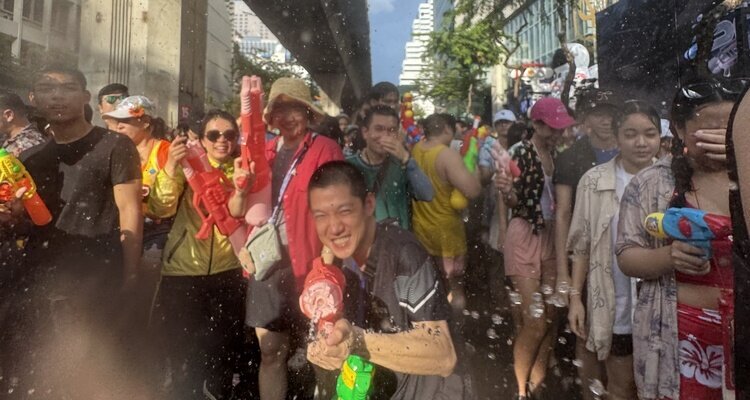 We're taking part in the water fight in Bangkok.
3. Songkran with Beach Vibes: Koh Samui vs Phuket?
On Thailand's islands, Songkran is more relaxed.
In Koh Samui, water fights are gentle and playful, with a chill, resort-style vibe and an inclusive Pride celebration.
Phuket offers variety: lively battles at Patong for the young and adventurous, while quieter, alcohol-free zones at Kata and Karon let kids and grandparents join safely. You can even stroll through Phuket Town to catch traditional parades, blending festival fun with easy island holiday vibes.
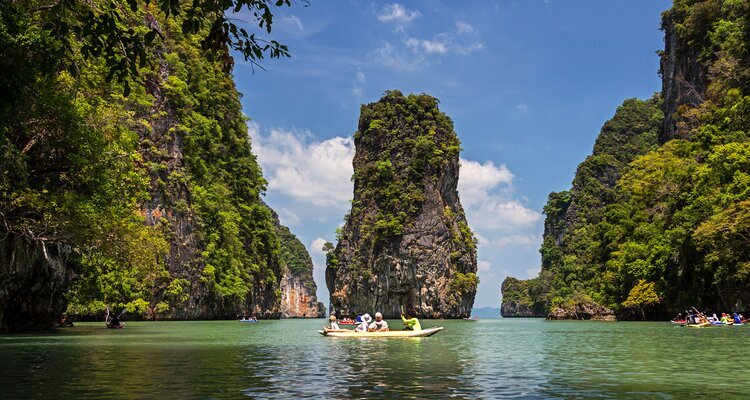
4. Ayutthaya: Water Fights… with Elephants
Yes, really. This is one of Thailand's most unique Songkran experiences.
You can expect elephants, beautifully painted with Sesbania flowers, to splash water with you around Ayutthaya's historical area, especially on Si Sanphet Road.
The water fights are much more chilled than in Bangkok — mostly locals join in, so the splashing is gentle and playful.
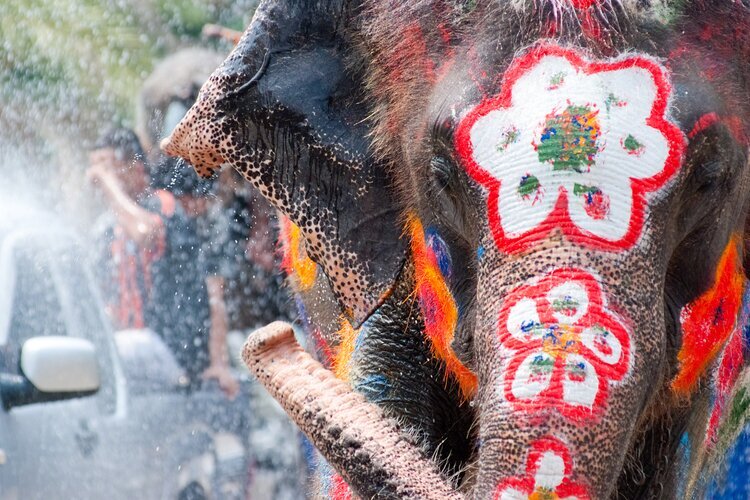 Painted Elephant in Songkran, Ayutthaya
5. Lampang: A Quieter, More Traditional Songkran
Like Chiang Mai, Lampang's got strong cultural roots, but with way fewer crowds—you'll get a more genuine and relaxed Thai New Year feel.
The main event is the Salung Luang parade. Colorful floats haul the shiny bowl (for blessings and fresh starts) down old streets, with pounding drums and cool Lanna outfits.
Then, locals often go to Wat Phrathat Lampang Luang, this ancient 1,000-year-old temple, for a simple Buddha bathing ritual.
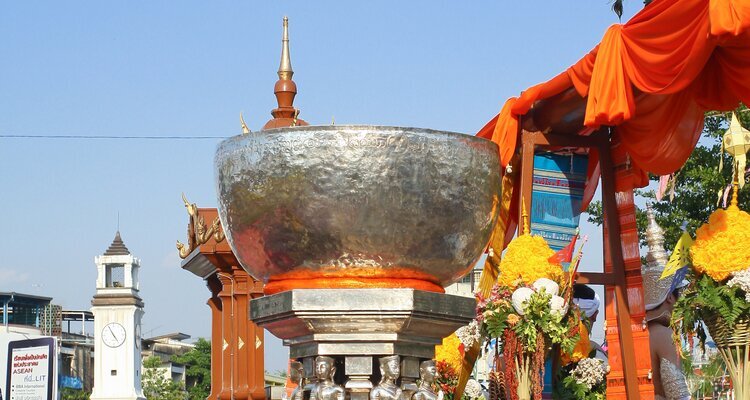 The Salung Luang Parade, Lampang
6. Pattaya: Good or Not?
Not really.
Pattaya's Songkran is mostly popular with young, budget travelers and party-goers.
The week-long celebration is dominated by the wildest street water fights and non-stop adult nightlife. The streets get very crowded and noisy, and traditional Songkran rituals are limited. So it's not a good choice if you want a calm and cultural experience.
If you just want a big water fight, Bangkok's Silom area is more organized. For authentic Songkran culture, Chiang Mai is still the best choice.
Sample Songkran Itinerary (10 Days): Bangkok – Chiang Mai – Phuket/Koh Samui
For the smoothest Songkran experience, we recommend the route Bangkok → Chiang Mai → Phuket or Koh Samui. It lets you experience Songkran fully, without getting stuck in traffic, overpaying for hotels, or feeling overwhelmed by crowds.
This itinerary starts in Bangkok before Songkran begins, when the city is still running normally. Temples and major landmarks are quieter to explore.
Then go to Chiang Mai for Songkran itself, where the New Year traditions feel most authentic. The city is logistically smoother during the festival: most attractions are close by, so traffic isn't a big problem. Additionally, hotel prices rise less in Phuket than in Bangkok or the islands.
After Songkran, flying to Phuket or Koh Samui lets you reset completely.
Sample dates & flow
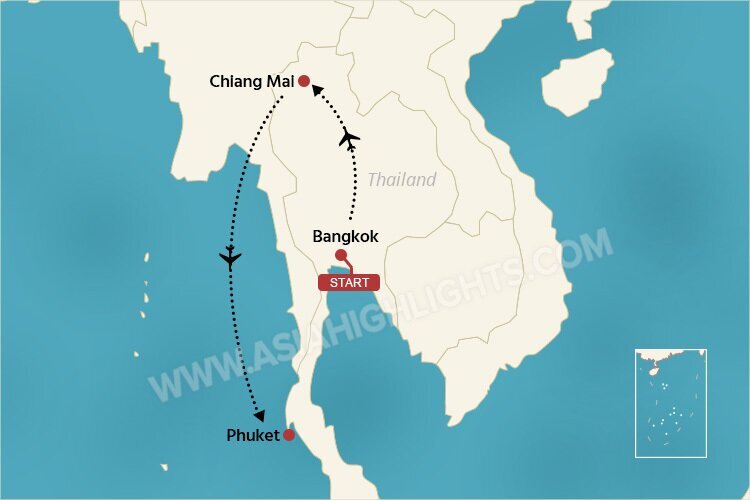
- April 9, 2026: Arrive in Bangkok
- April 10–11: Bangkok city tour (Grand Palace, temples, neighborhoods, food)
- April 12: Fly to Chiang Mai (arrive before the festival starts)
- April 13:
Morning rituals at Wat Chedi Luang and Wat Phra Singh,
afternoon to evening water fun around Tha Phae Gate,
afternoon watching the official Songkran parade - April 14: Day trip to an elephant sanctuary outside the city — quieter, greener, and crowd-free
- April 15–18: Phuket or Koh Samui for beach time and recovery mode
Skip the travel logistics and booking hassle—our 10-Day Songkran Festival Tour has it all planned, so you can just enjoy Thailand's New Year.
Is It Expensive to Visit Thailand during the Songkran Holiday?
During Songkran, prices will go up, roughly 10% higher than the shoulder-to-low-season rates for other dates in April. However, this is still significantly lower than peak-season rates. Price increases during Songkran mainly come from hotels and flights.
Hotel prices jump most in water-fight hotspots, typically around 20%.
For example, SO/ Bangkok (Silom) rises from US$170 to US$206, while Avani+ Riverside Bangkok Hotel, away from the action, stays at US$124 throughout April.
By comparison, Chiang Mai sees the mildest hotel increases among major Songkran destinations, usually no more than 15%.
Flights also spike up to 50% within 3 days before the festival.
For example, Bangkok–Chiang Mai fares typically jump from US$35 to US$70. Booking early or flying outside peak days helps save money.
What usually doesn't increase much:
Local attractions, day tours, temple visits, and private transfers (outside water zones).
Tips or Etiquettes for Water Flight on Songkran
Water fights are an extremely fun way to celebrate the Songkran Festival. If you want to join them, follow these tips to avoid any problems.
- Follow the rules: It's a "war," but with boundaries. Use clean, fresh water and water guns (high-pressure guns are banned), and never spray directly at someone's eyes or face.
- Stay hydrated and avoid heatstroke: April is Thailand's hottest month, with temperatures reaching up to 40°C (104°F). Bring water, wear light clothing, and take breaks in the shade.
- Wet powder: You may have white powder smeared on your face as a blessing. This is common during Songkran (except on Khao San Road, where it's prohibited). Carry water if you want to rinse off.
- Dress code: Goggles and swimwear help, but always wear a T-shirt out of cultural respect.
- Protect your electronic devices using a waterproof bag.
- Don't splash water on monks, the elderly, babies, pregnant women, or people who are working. Try to respect people who wouldn't expect to participate in the water fight.
FAQs about the Songkran Festival in Thailand
1. Which cities are more family-friendly during Songkran?
If you bring your little kids or parents, Ayutthaya, Lampang, and Phuket are your best bets! They still have all the Songkran fun, but it's way more chill.
2. Is public transport still running during Songkran?
Yes, but services fill up fast, and the roads get super jammed. Book early and allow extra travel time.
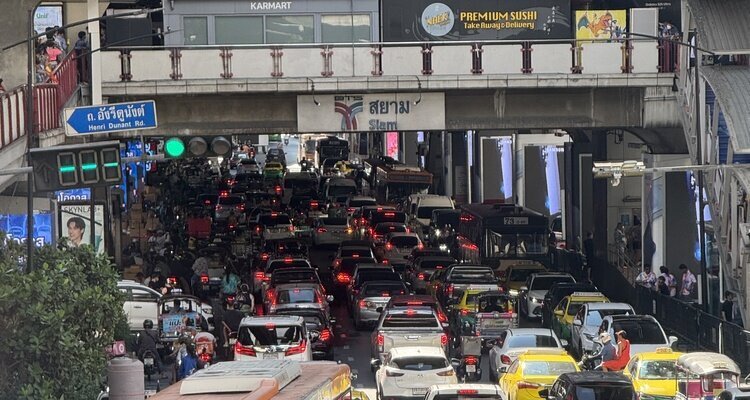 Bangkok Traffic During Songkran
3. Is Songkran more expensive than usual?
A little bit. Prices can jump up by about 20%. Flights and hotels in the super-popular, right-in-the-middle-of-the-action spots will be pricier. But if you're cool with staying a little outside the main festival areas or eating at local spots (which are still amazing!), you probably won't notice a huge difference.
4. What are the best places to celebrate Songkran for couples?
If you love to see traditional rituals, Chiang Mai and Lampang are great choices.
If you prefer a more laid-back vibe and skip crowds, go to Koh Samui.
5. Is it a good idea to travel to Thailand during Songkran?
YES! Absolutely! It's the Thai New Year, and it's an AMAZING time to experience the culture. You get to jump into those epic water fights (seriously, everyone does it!) and see cool traditions like giving Buddha statues a ceremonial wash.
6. Will Songkran affect sightseeing and travel plans?
Yes — expect crowds, street closures, and slower travel in big cities like Bangkok and Chiang Mai; plan extra time and choose calmer areas for temples and attractions.
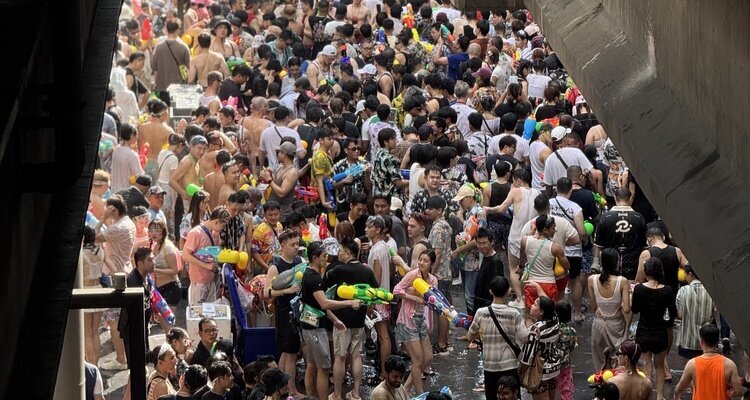 Water Fights at Silom Area During Songkran, Bangkok