
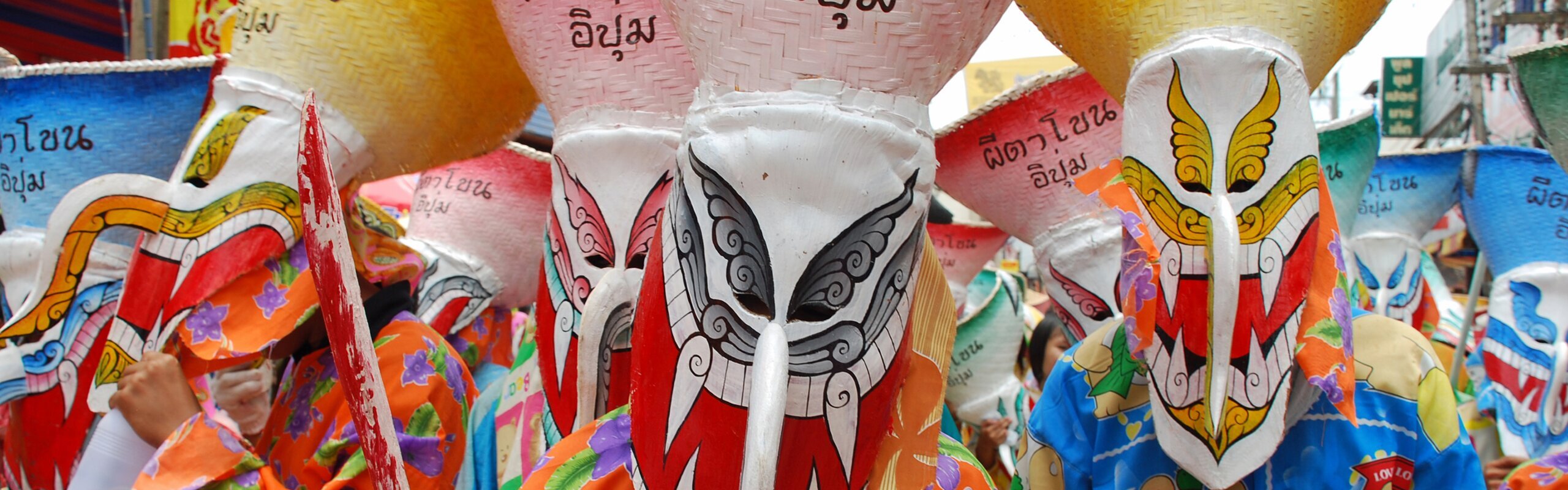
Most people know Songkran or the lanterns of Yi Peng in Thailand, but if you're looking for something more off the beaten path, Phi Ta Khon is worth adding to your list.
Often called the Thai Ghost Festival, it's a massive, colorful party where the whole town puts on spooky masks and joins a huge ghost parade.
Instead of just watching the parade go by, let's get you clued in on the ancient stories and wild masks. We'll also share the hidden gems and insider tips to help you experience the festival like a local pro in this guide.
Quick Facts about Phi Ta Khon Festival
- Official name: Bun Luang and Phi Ta Khon Festival
- Location: Dan Sai District, Loei Province, Thailand
- Dates: Late June or July (6.20-6.22, 2026)
- Duration: 3 days
- Cost: Free — no tickets needed, open to everyone
- Nearest airport: Loei (LOE), then about 1.5 hours by road to Dan Sai
- Best for: Photographers, culture enthusiasts, off-the-beaten-path travelers
Origin of the Phi Ta Khon Festival
Phi Ta Khon, originally called Phi Tam Khon, means "spirits following people."
The name is believed to come from a famous Buddhist legend about Prince Vessantara (the Buddha's penultimate incarnation).
After completing the ultimate act of generosity during his exile, the king and the people welcomed him back with a huge celebration.
The party was so wild and joyful that it lured the spirits and ghosts out of the forest to join the dance. That's how the whole tradition of ghosts partying with locals was born.
This also reflects a core pillar of Thai animism: in Dan Sai, ghosts are guests rather than feared shadows.
 Phi Ta Khon Festival
When Is the Phi Ta Khon Festival in 2026?
The Phi Ta Khon Festival 2026 will take place from June 20 to June 22 in Dan Sai.
Please note that the festival does not have a fixed annual date. Instead, the timing is determined through a local spiritual ritual.
Each year, a hereditary medium known as Jao Pho Kuan performs a spiritual ritual to consult the spirits and determine the festival dates. The official dates are only announced after this process is completed, and they typically fall in late June or early July.
Tips: Dates are often confirmed only a few months in advance, so check TAT Loei updates before booking any non-refundable flights or hotels.
 Phi Ta Khon Festival, Loei, Thailand
Secrets Behind the Ghost Parade
The ghost parade is the festival's biggest highlight, a riot of color, sound, and playful chaos.
Amid all the dancing, teasing, and jingling bells, there's more than meets the eye. Every ghost, every costume, and every mask carries meaning rooted in centuries-old beliefs.
Here are the secrets that make this Isan tradition so magnetic.
Big Ghosts vs Little Ghosts
During the festival, you will see two very different kinds of ghosts: Phi Ta Khon Yai (Big Ghosts) and Phi Ta Khon Lek (Little Ghosts).
Phi Ta Khon Yai (Big Ghosts)
Phi Ta Khon Yai are the leaders of the parade. There are only two—one male and one female.
The male figure carries a large wooden phallus, while the female figure has prominent breasts. For locals, these symbols represent a wish for fertility and a good harvest.
Both are built on tall bamboo frames with a person hidden inside. But making these big ghosts is not open to everyone.
Only certain families have the right. The craftsmen must perform a Wai Kru (teacher respect ritual) before they start. Once they take the job, they must make the masks for three years in a row.
Phi Ta Khon Lek (Little Ghosts)
While the big ghosts lead, hundreds of little ghosts follow, making this the heart of the festival's fun.
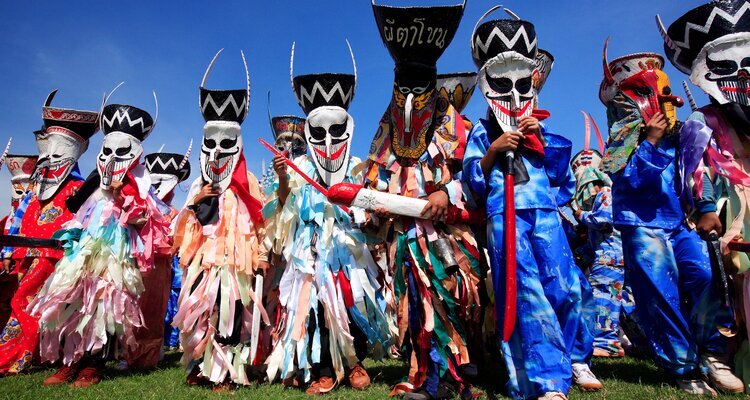
Dressed in bright masks with big teeth, ragged clothes, and carrying bells or wooden phallic props, they tease the crowd, joke around, and pull people into the celebration.
Unlike the leaders, anyone can be a little ghost—including you!
 Phi Ta Khon Festival, Loei, Thailand
The Costumes and Masks of Phi Ta Khon
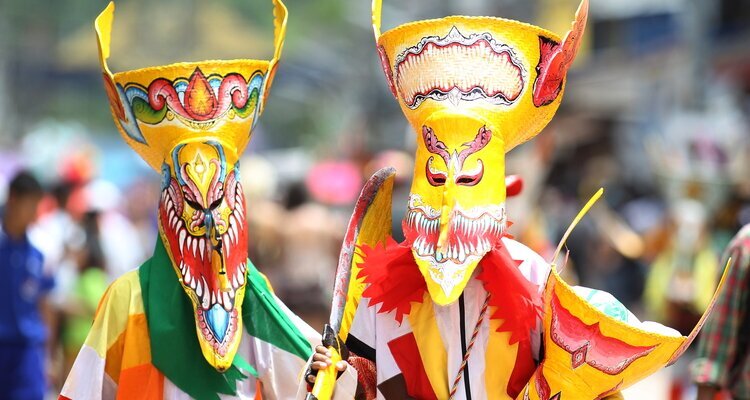
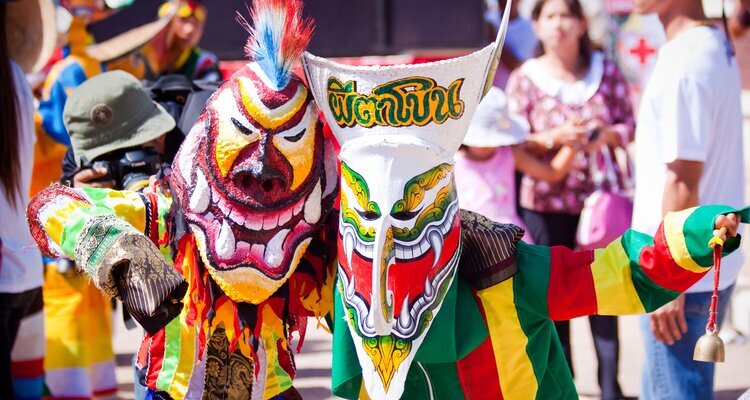
The Phi Ta Khon costumes burst with color and sound, yet every piece is crafted from simple, everyday items that reflect farming life, fertility, and spiritual protection.
Take the tall headpieces: they're actually bamboo sticky rice steamers (Huad), symbolizing a wish for a good harvest.
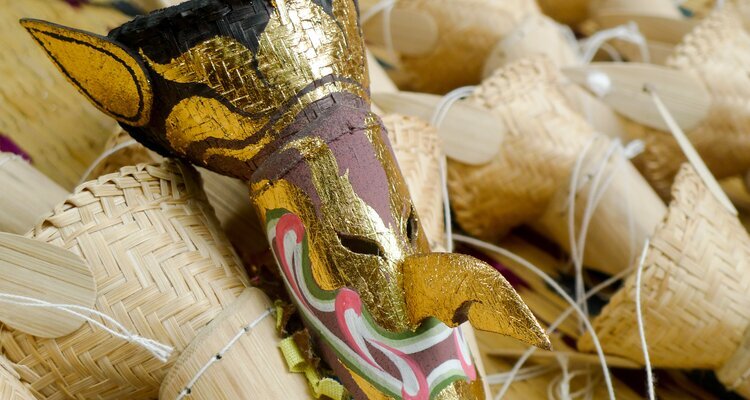
The masks are hand-carved from coconut shells or soft wood found in local gardens. Interestingly, their hilariously long noses are actually phallic symbols, meant to bring fertility and a bountiful harvest.
Even the belts, jingling with cattle bells, cans, or bottle caps, aren't just decoration. They call the spirits, ward off evil, and welcome rain.
Once the costumes and masks were discarded after the festival to ward off bad luck, many are now kept as souvenirs or sold as folk art.
 Phi Ta Khon Festival, Loei, Thailand
3-Day Phi Ta Khon Festival Schedule
Many people think Phi Ta Khon is just the ghost parade, but the festival actually spans three days as part of the larger Bun Luang (Great Merit) Festival.
The famous ghost parade is held on the second day. If you only have one day, make it that one for the iconic experiences.
The other days also offer unique experiences, from riverside blessings to temple ceremonies. If you want a quieter and more spiritual experience, add these 2 days to your schedule.
Here's what each day looks like:
Day 1: Welcoming the River God / Phra Uppakut Ritual
The festival opens with a sacred ritual to invite Phra Uppakut, the guardian spirit of the river, to protect the village for the coming days.
Around 3 a.m., villagers in white gather at Wat Phon Chai to march toward the river, beating gongs and shouting "hom~hom~" to drive away bad spirits.
They then wade into the water to retrieve three white stones symbolizing Phra Uppakut.
The stones are carried back to the temple and placed in shrines (with offerings like monk robes, alms bowls, and water pots).
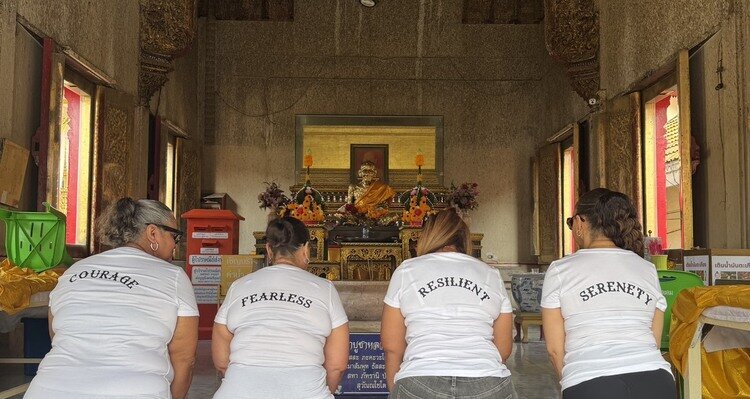
Beyond the river ritual, you can also see locals giving alms at the temple or a soul-calling ritual (Bai Si Su Khwan) at the medium's house.
Tips: The 3 a.m. riverside ritual is deeply religious and primarily for locals. It can be challenging to join unless you understand Thai and are willing to wake up very early.
 temple visits
Day 2: Phi Ta Khon Parade—the Festival Peak
From morning to afternoon, the entire town bursts into a wild, joyful ghost carnival. Expect vibrant masks, pounding drums, and non-stop dancing everywhere.
If you want to beat the crowds, head to Wat Phon Chai before 8:00 AM. You'll see hundreds of young men in ghost costumes gathering, turning the quiet temple into a surreal sea of color.
If you are keen on the street party, join in the parade along the Kaew Asa Road after 10:00 AM. Unlike stiff, formal parades, you don't just watch it. The ghosts will come up to you, joke around, pull you into dances, and pose for photos.
Throughout the parade, you'll also see men covered head to toe in black mud, dancing through the streets. This ritual represents a prayer for fertile soil and a bountiful harvest.
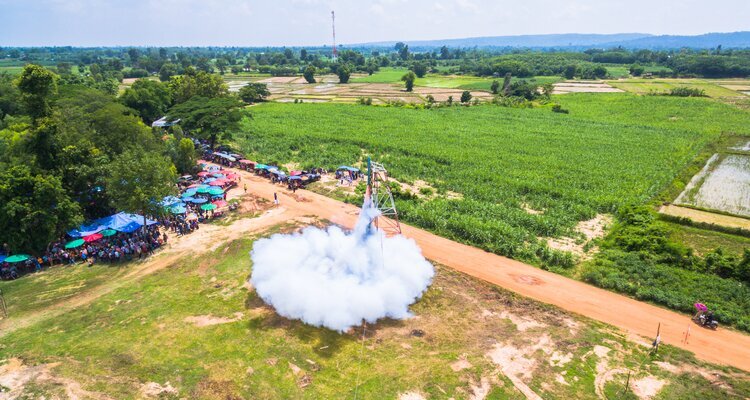
The grand finale hits around 3 p.m. with the Bun Bang Fai (bamboo rocket) launch. Dozens of giant homemade rockets shoot into the sky with thunderous roars, shaking the whole valley. This is a powerful signal to the rain gods to bring rain for a successful harvest.
 Bun Bang Fai
Day 3: The formal Bun Luang / Bun Phra Wet merit activities
Today is all about listening to the scriptures and giving alms. This is the part most travelers skip, but it's actually the spiritual heart of the festival. If you are interested in the culture, don't miss it.
The monks at Wat Phon Chai begin chanting the Mahachat (13 chapters of the Buddha's life stories) from 4 a.m. until night. The serene contrast to the previous day's chaos is the festival's true spiritual heart, even if you do not understand the words.
If you want to see it, you can visit the temple before 8:00 am, when you can also watch the villagers giving alms.
Tips: You don't need to stay for the full 13 chapters of chanting.
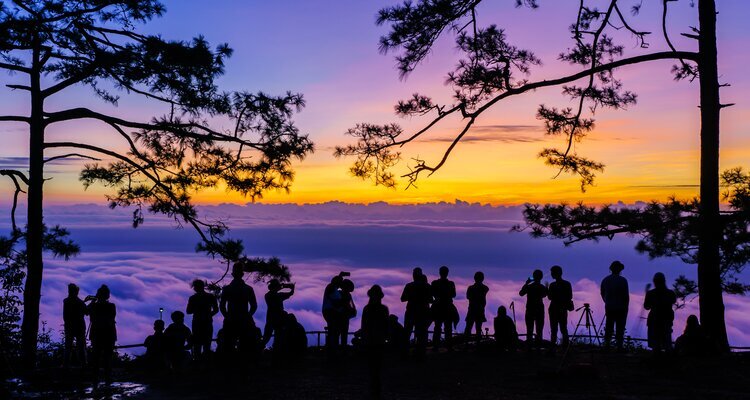
It's best to leave after morning rituals to beat the traffic or explore nearby nature spots like Phu Kradueng National Park.
 Phu Kradueng National Park, Loei, Thailand
How to Join the Phi Ta Khon Festival In Depth
If you want more than just watching the parade, here are a few ways to truly immerse yourself in the festival:
We highly recommend visiting the small Phi Ta Khon museum first.
You'll see old masks, historical photos, and how they are made. After that, you'll start to recognize the symbols, the jokes, and the deeper beliefs behind what's happening around you.
If you want some interactive fun, go to a local mask workshop. You can make a small mask with traditional materials or paint a ready-made base. Once you finish, you can try it on right away!
Don't miss the vibrant Isan street food either. Try fermented sausage, grilled pork salad, sticky rice, and other local specialties from street vendors. The prices are wallet-friendly, and the flavors are authentically northeastern Thai.
Here is a simple plan:
- Day 1 (June 20): Arrive, visit the small Phi Ta Khon museum, and make your own mask
- Day 2 (June 21): Watch the parade and rocket launch, and enjoy Isan snacks
- Day 3 (June 22): Listen to the chanting, watch alms-giving, then explore nearby forest parks or head home
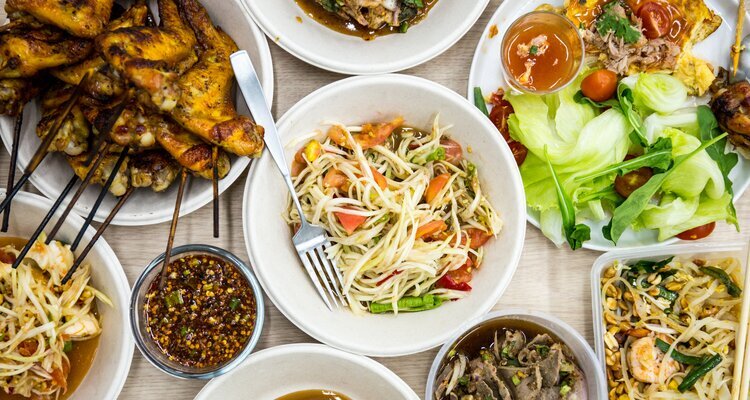 Papaya Salad
Getting to Dan Sai for Phi Ta Khon Festival
Dan Sai sits in the heart of Isan (Northeastern Thailand) and lies roughly midway between Bangkok and the Laos border.
It's remote, without a train station or direct flights, so the most efficient way is to travel via Loei, the nearest hub.
Best Option: Fly into Loei
Bangkok is the only city with direct flights to Loei. This is the fastest way in—a quick one-hour hop followed by a 90-minute drive to Dan Sai. But there are only two flights a day, so book as soon as your festival dates are confirmed.
When Loei flights are sold out, flying into Phitsanulok is a good backup. It takes 2.5 hours to get to Dan Sai.
Traveling by Road: Only Recommended for Short Trips
Buses from Bangkok or Chiang Mai are generally the last resort. The journeys often exceed eight hours and can be extremely tiring for most travelers.
Road travel works best for shorter trips from nearby provinces, like Sukhothai, Udon Thani, and Khon Kaen. All of them are within 4 hours to Dan Sai.
However, public transport to Dan Sai doesn't follow a strict "Western" schedule. Vans mostly leave only when full and make roadside stops. During the festival, they're always packed, and you may face long waits or traffic on the way back.
For a smoother, time-saving experience, we strongly recommend booking a private car or transfer in advance.
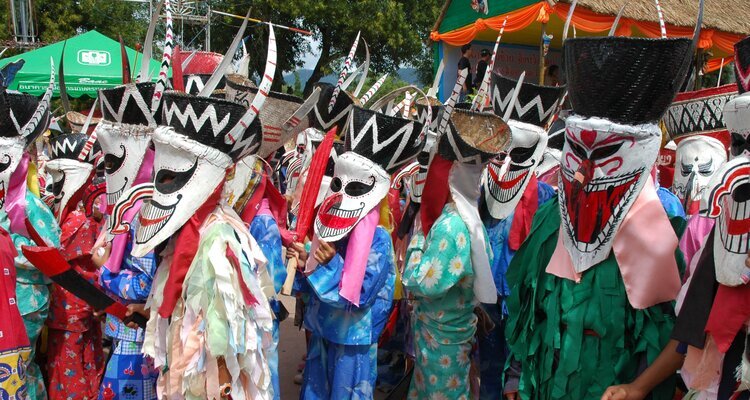 Phi Ta Khon Festival
Where to Stay in Dan Sai during Phi Ta Khon Festival
To make the most of the Phi Ta Khon Festival, stay in the Dan Sai town center if you can. Being within walking distance of the parade will save you from wasting half your day in festival traffic.
However, there are a few things you should know first:
- Accommodation is basic and limited.
Since Dan Sai is a small farming town, don't expect large hotel chains here. Your options are mostly small guesthouses, modest hotels, and local hostels.
Among them, Pupiang Po Da Arte Resort is one of the best hotels, even similar to a 3-star hotel in Bangkok. If you want more comfort, PhuNaCome Resort is the premier option, though it's a 5 to 10-minute drive away.
- Prices skyrocket.
During the festival, that standard $15 guesthouse can easily jump to $30, while higher-end spots like PhuNaCome can leap from $80 to over $140 per night.
- Rooms are sold out in minutes.
Even though they are quite basic, rooms in Dan Sai often sell out the moment the festival dates are officially announced.
So keep an eye on the festival date announcement and book immediately. Last year, we failed to secure a room in town and had to stay in Loei City. The pre-dawn wake-up calls and grueling festival traffic left us exhausted!
What if hotels in Dan Sai are sold out?
If Dan Sai is fully booked, your only remaining alternatives are Phu Ruea (30–45 mins away) or Loei City (1–1.5 hours away).
These places have more hotels, but most are still budget-focused. If you stay here, be prepared for the extra commute time and transport costs.
Phi Ta Khon Festival Travel Tips
1. Rainy season and heat warning
The festival happens during the rainy season. Besides the sudden showers, you must be prepared for the heat.
Events run from 10:00 AM through the afternoon. Temperatures often exceed 33°C (90°F), and it's very humid, so take precautions against heatstroke.
To stay comfortable and safe, bring light rain gear, sunblock, and a hat. Drink water often and find shade when you can.
2. Language Barrier
Since English is not common in this small town, download a translation app in advance. If you want a smooth trip, hire an English-speaking local guide or a driver. They will bridge the communication gap and provide deeper cultural insights.
3. Cultural Do's and Don'ts
This festival mixes Buddhism with local spirits, so please respect the rituals.
- Do not touch the masks or the dancers.
- Ask before you take a photo.
- Dress with shoulders and knees covered when you are at the temple.
4. Planning tips
Booking accommodation early is the most important step as rooms in Dan Sai go fast. If you stay in Phu Ruea or Loei, make sure you have your car or driver ready.
FAQ About Phi Ta Khon Festival
Is Phi Ta Khon Worth the Trip?
Yes! Phi Ta Khon is worth it if you love real culture. It is a unique tradition from northeastern Thailand that blends Buddhist rituals, old legends, and wild celebration.
You will see bright masks, handmade suits, and a lively parade. It feels like a living theater.
But it happens in a remote town with difficult transport, simple accommodation, and hot weather. If you want a comfy first trip to Thailand, this might be a challenge.
How crowded is it?
Expect tens of thousands of Thai tourists to descend on this tiny town, especially for the grand parade on Day 2.
The streets and temples get very packed, movement is slow, and the music is loud (bring earplugs if you're sensitive).
But you can always step into a side alley if you need space. The rest of the time, like early morning, evening, or non-parade days, you'll feel much more relaxed.
Can foreigners join the parade?
Yes, completely! The festival is open to everyone.
You don't need special permission—just grab a mask and a colorful patchwork costume (you can buy or rent them all over town) and jump into the line.
Many locals will happily invite you to dance, take photos, or play together. The atmosphere is very warm and inclusive.
Is it friendly to kids?
It is very family-friendly, especially during the morning parade.
Despite the "ghost" theme, the atmosphere is light and playful, not scary. The "ghosts" mostly tease the crowd for laughs and photos, making it a giant, colorful street party. You'll see plenty of local children in their own mini-costumes.
Since the midday is quite crowded, you're suggested to join in early for more space and cooler weather.
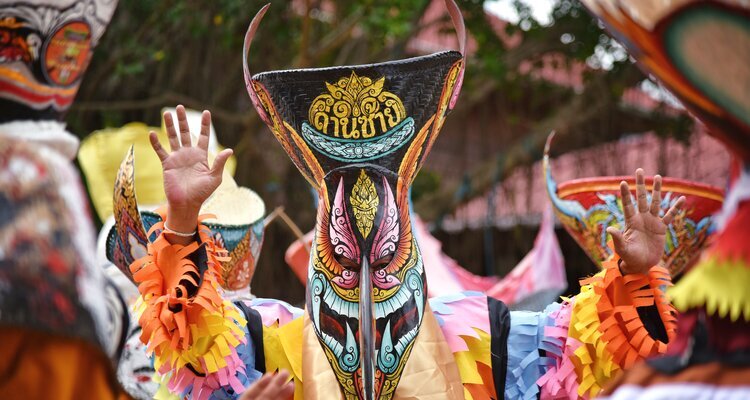 Phi Ta Khon Festival, Loei, Thailand
Join the Ghosts: Plan Your Phi Ta Khon 2026 Trip with Us
Phi Ta Khon is more than a parade—it's a living celebration of Thai culture, full of color, music, and playful traditions.
Join the ghosts in Dan Sai, enjoy the street festivities, and for a smooth, hassle-free experience, plan your trip with us to make the 2026 festival unforgettable.
For more inspiration, you can also explore more festivals to explore in Thailand.