
Beyond the Land of Smiles: Understanding the Thailand Behind the Image
Seasonal travel planning
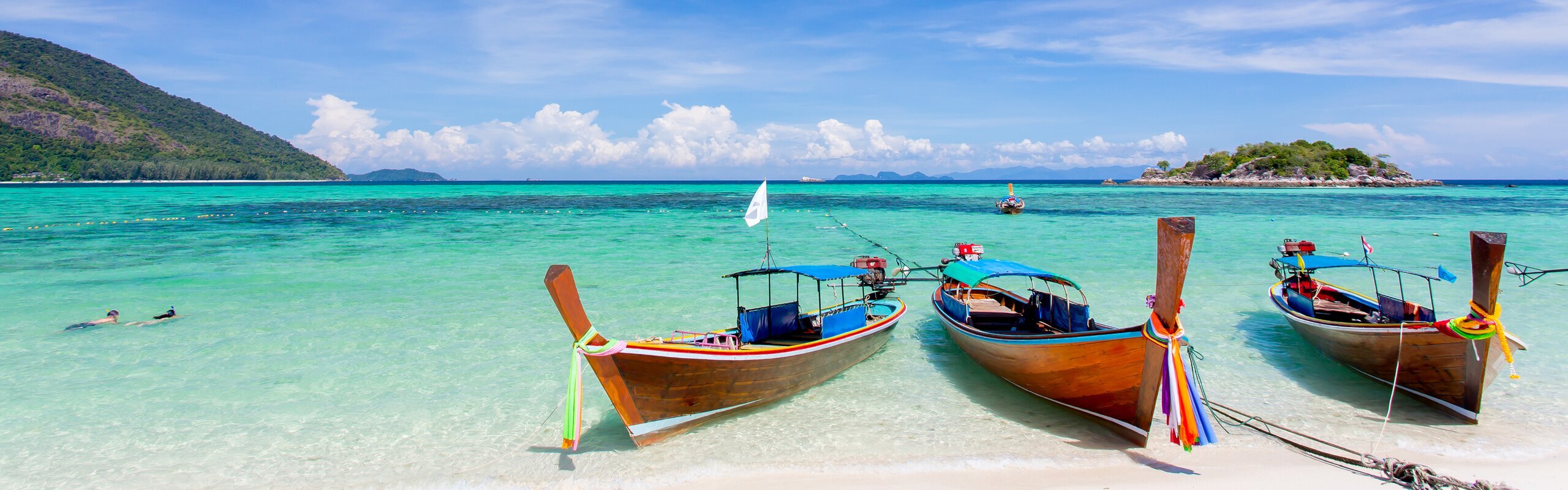
Thailand has long been associated with a familiar set of images. A tropical beach. A golden temple. A cheap massage. Street food for a few dollars. Smiling locals. Together, they have shaped the image of Thailand as the Land of Smiles.
None of these images is wrong. The seas are real. The temples are real. The food is extraordinary. The warmth is real, too.
But each one is only the first layer.
Look a little closer, and Thailand becomes more complicated, more nuanced, and much more interesting than the familiar image suggests.
After years of traveling across Thailand, working with local guides and communities, and listening to what travelers experience on the ground, we have found that many common ideas about Thailand are incomplete.
So, in this article, we want to look beyond the first layer and explore Thailand behind the image.
1. A Smile Does Not Always Mean Agreement
In Thailand, a smile can mean much more than happiness or agreement. It can soften disagreement, embarrassment, uncertainty, or refusal.
This is closely connected to greng jai (เกรงใจ), which is about not imposing on others or putting them in an uncomfortable position. Because of this, a direct "no" can sometimes feel too blunt. A smile can make it easier to say no without creating discomfort.
This is why one specific frustration keeps repeating itself among travelers: things appear to have been agreed, and then don't happen.
Nobody lied. You simply understood the answer differently.
For example, a guide our team has worked with for years may ask a boat captain whether the sea tomorrow is safe and get a more honest answer than a visitor asking the same question at the pier. The smile may look the same. The answer may not be.
But there is an important boundary here.
A smile from someone with no stake in the answer — a passerby, a vendor you'll never see again — may simply mean friendliness. Not every Thai smile needs decoding.
It matters more when you are asking for something important: a price, a schedule, a favour, or an answer you may not want to hear.
2. Thailand Is Cheap, But Cheap Is Not the Whole Story
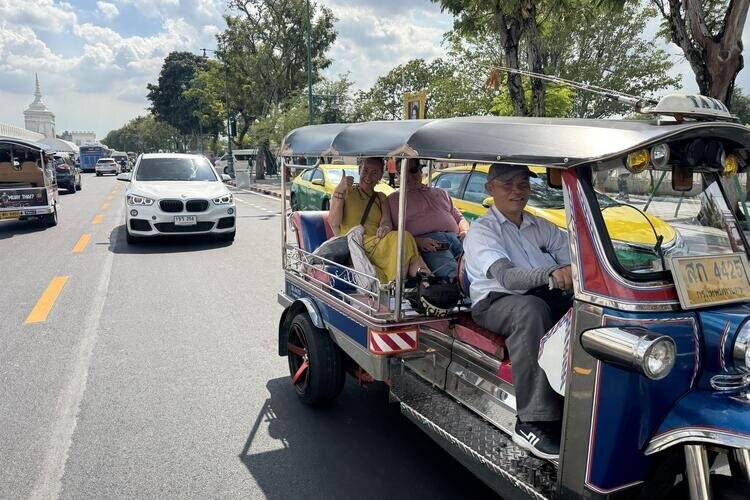
Thailand is cheap. Genuinely. Two dollars for lunch, thirty dollars for a room, ten dollars for an hour of massage.
But Thailand also has a wide range of prices. In Bangkok, you can eat at a two-dollar noodle stall or a three-hundred-dollar tasting menu in the same district. You can have a simple local massage for a few hundred baht, or spend a day at a high-end wellness retreat.
You can travel cheaply, or you can travel in luxury. So when you see a big price difference for what seems like the same experience, don't immediately ask, "Isn't Thailand supposed to be cheap? Why is this so expensive?"
Take elephants. A standard half-day elephant experience might cost around $50, while an elephant experience with a luxury tent can cost more than $400. The difference is not simply the room. You are getting a different way of experiencing the elephants, with more time and a very different setting.
The same applies to cooking. A group cooking class with 30 people can be inexpensive. But you can also cook with a local Lanna family, pick ingredients from their garden, and prepare a meal together in their home. The price and the experience can be completely different.
So yes, Thailand has plenty of cheap options. It also has experiences that cost much more. And even when you choose the more expensive option, Thailand can still be very affordable compared with Western countries.
3. Thailand Feels Relaxed, But It Has Strong Social Rules
Thailand can feel very easygoing to a foreign traveler. You can wear flip-flops almost everywhere, eat on a plastic stool by the street, and walk into a small restaurant in shorts and a T-shirt. Nobody seems particularly bothered.
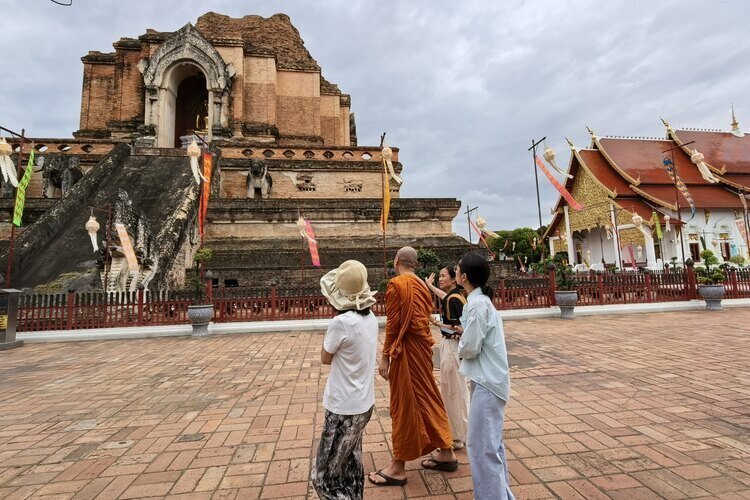
I saw this contrast clearly at Wat Chedi Luang in Chiang Mai. The young monk who walked around the temple with us was wearing flip-flops while explaining the temple and the customs around monks. The casual appearance did not mean that the traditions behind the temple were casual.
Thailand has plenty of social rules. They are just not always visible to a foreign traveler.
Thailand is a strongly hierarchical society, with age, status, occupation, and social position shaping how people interact. You can see this in who is greeted first, how the wai is performed, which honorifics and pronouns are used, and who is given precedence. Monks and elders are treated with particular respect.
There are also everyday rules that can be easy for foreigners to miss. The head is considered the highest part of the body and the feet the lowest, which is why pointing your feet at someone or stepping over their belongings can be offensive.
I saw another simple example inside a temple hall. A local person gently reminded a visitor who was sitting with their feet pointing toward a Buddha image to adjust their position.
Visitors are given plenty of room to get these things wrong. But when you enter places like temples, it is worth paying a little more attention to how you dress, where you point your feet, and how you interact with monks.
4. Mai Pen Rai Does Not Mean “I Don’t Care”
The Thai phrase mai pen rai (ไม่เป็นไร) is easy to misunderstand.
It is often translated as "no problem" or "never mind." But this phrase can be confusing because it does not always mean that something does not matter.
For some travelers, hearing mai pen rai after a delay, a mistake, or an unexpected change can feel strange. They may think: “Are they not concerned? Do they not want to fix the problem?”
But the meaning often depends on the situation.
In many cases, mai pen rai is a way of keeping a small problem from becoming a bigger one. It can mean: “It’s okay,” “Let’s not make this uncomfortable,” or “This can be handled.”
Many travelers expect problems to be addressed more directly. In Thailand, the response can sometimes be calmer, even when the issue is being taken seriously.
5. Thai Monks Are Not Always What You Imagine
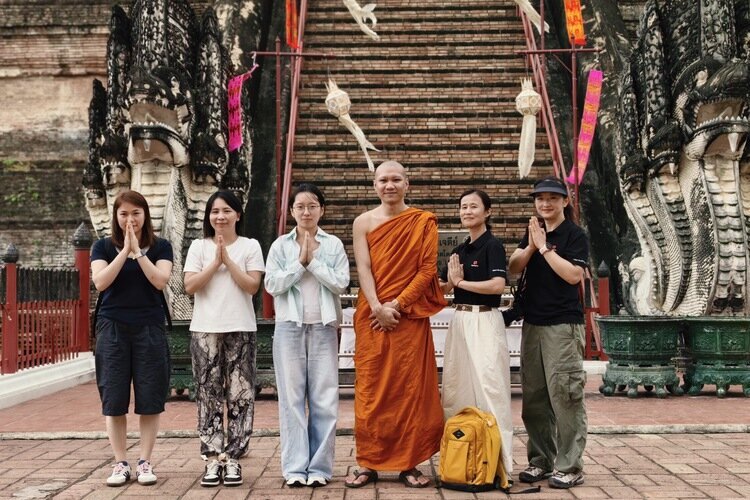
Like many travelers, I used to associate Thai monks with meditation, spiritual practice, and a life removed from ordinary concerns.
So it can be surprising to see a monk using a smartphone. But monks live in modern Thailand, too.
I saw this clearly when I met a young monk at Wat Chedi Luang in Chiang Mai. He was studying for a PhD, had traveled to Indonesia for an academic exchange, and taught English to children, and used his phone to look up things he was interested in.
If you have the chance, or join our Temple Tour with Monk Chat, talk to a monk when you visit a temple. You may see a very different side of their life.
6. Elephants: More Than a Symbol of Thailand
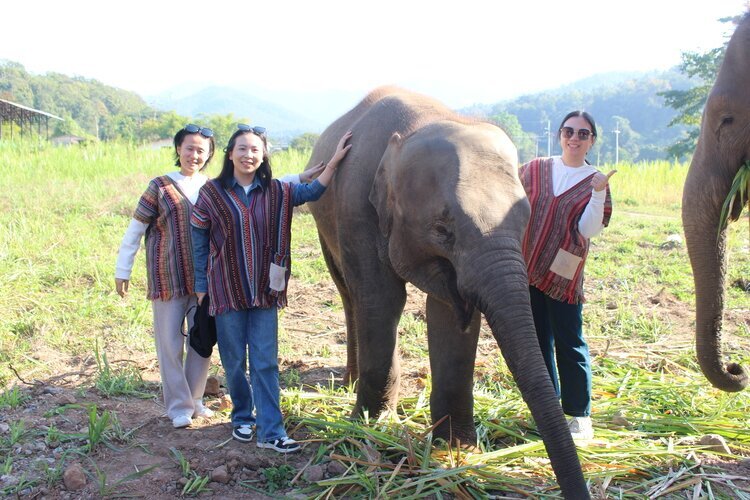
The elephant is on the old flag, in the souvenir shops, and on T-shirts everywhere. Some travelers even see it almost as a national pet: gentle and beloved.
Elephant tourism in Thailand is often criticized as unethical. Some of that criticism is justified. But the story is more complicated than simply saying that elephant camps are wrong.
Thailand's elephants have a long working history. For generations, they were used to haul teak out of the forests, alongside mahouts who developed the skills to work with them. When commercial logging was banned in 1989, many elephants and their mahouts lost their traditional source of work. Tourism became one of the industries that absorbed them.
That is why we look closely at what actually happens at an elephant camp before we recommend it.
We look at how the elephants are handled, how much time they spend around tourists, whether riding or performances are offered, and whether the elephants are given any choice.
We don't recommend every elephant camp we inspect.
Seeing Thailand Beyond the First Impression
The first impression of Thailand is easy to understand. The smiles, the beaches, the temples, the food, the easygoing atmosphere.
But look a little closer, and Thailand starts to reveal another side.
That is the Thailand we want our travelers to experience.